Archives

Preparing Crochet Edges

Depending upon my project, here’s a little crochet tip that I like to do which helps to prepare my piece for seaming or joining.

I like to finish off my crochet piece by bordering it with one row of single crochet stitches around the entire square or garment.  I even like to do this when not joining because it gives a nice, clean, professional look to your piece.

Basically, when you get to the end of your pattern, don’t fasten off, just continue around making a single crochet into every stitch within your project.  That border row of single crochet will be where you will place your joining stitches to form your seam.   Here are a few examples showing how to single crochet an edge.  Complete your single crochet on working edge, when you get to the corner,  complete three single crochet stitches in corner to keep edge from curling.  Continue with single crochet on next edge by inserting your needle along the edge stitches.  Keep them spaced fairly even so that your piece doesn’t curl and keep track of how many single crochet stitches you do so that you can do the same amount on the other side edge for a square, rectangle match the east/west sides with same number and the north/south sides with the same amount of stitches.  Next corner do your three single crochet and do one single crochet in each chain stitch so you have the same amount of single crochet stitches across the bottom edge as you do the top edge.  Continue with this pattern until you get back to the beginning corner of your top edge and fasten off.

Working sc along side edge

Showing how I insert hook along side edge


Showing 3 sc in corner stitch

How sc look along your finished piece

If making a garment, you might only want to single crochet along the places that need to be seamed; along sleeve and side seams.  Take into consideration the design and what works best for your particular pattern or design.


*TIP FOR JOINING:    Make sure that you use the same type of yarn as your project.  You can use a different color if you want contrast but if your project called for acrylic yarn, then use acrylic yarn for stitching seams or if you used merino wool yarn, then join using merino wool yarn, etc.  You get the picture.


HAPPY CREATING!!

Disclaimer:  This post contains affiliate links – “small commission earned”

Crocheting “Extras”

Now that you are sitting in your most comfortable chair and are surrounded by a pile of wonderful yarn just itching to be crochet into something special, take a moment to review the following items that I think will make your yarning experience much easier and more convenient.  These are some of my favorite crochet “extras”.

Having a crochet case to organize all your hooks by specific size will save you a lot of time and frustration.  When I first started crocheting, I would just place my hooks in a Ziploc bag and would have to rummage through them all to find the specific hook I needed for my pattern.  With the case, I just quickly slide my hooks into their own slot by number/letter size.   There are a wide variety of styles available.  I personally use a zippered style case because I can also enclose some of my other accessories with my hooks to keep them all in one place.

Another great accessory to have are some stitch markers.   I like the split lock markers that look like plastic safety pins.  They are light in weight, easy to use and colorful so you can select ones that will stand out when you are crocheting.  Budget constraints an issue, you can also use a different color of yarn and tie it in the stitch where the pattern calls for a marker to be placed. Works the same, just takes a little longer to tie and untie the yarn marker.

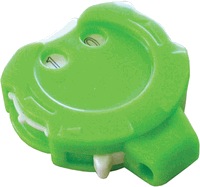
For me, a must have “extra” is a row counter.   I use to make pencil marks on a piece of paper to count my rows, which, believe me, is a very time-consuming way for counting.  Now with a counter sitting on the arm of my chair, one click and I’ve counted my completed row and can tell at a glance how many more rows I need to do.  I like the style that has a locking mechanism so my counter never loses its place, especially if I have to put my project away and all my rows haven’t been completed.

You’ll find that a necessary accessory is a tapestry/yarn needle.  They have a very large eye which makes quick work of threading your yarn through the needle.  There are different kinds of needles, ones with a straight tip or you can purchase a style with a curved tip.  It is nice to have both types of yarn needles in your crochet stash.

Of course, a small retractable tape measure and 4″ embroidery style scissors are needed too.  

A crochet tote or lovely basket is a great way to store your supplies and/or yarn.  Place it by your comfy chair and have everything right at hand when you decide to work on your project and looks great too.  *TIP:  one way to keep your working skein of yarn readily available is to seal it within a plastic Ziploc bag, cut a small hole in the corner of the bag itself and have your yarn come out of that opening.  Helps to keep the ball of yarn contained and tangle free.

An Ott Lamp or Daylight Lamp to work by is most helpful and helps reduce stress on your eyes.  Also, comfort grips which slide onto your hooks or comfort grip hooks themselves will help you with fatigued hands and wrists.

Of course, you will be able to locate some of these crocheting accessories at your big box sewing/craft stores.  But don’t forget to check out some websites like Knitting Warehouse and Yarn.com for a wide variety and unique crocheting “extras” too.

Hopefully, some of these suggestions will lend themselves to giving you a great crocheting experience!!!


HAPPY CREATING!!

Disclaimer:  This post contains affiliate links – “small commission earned”
Abbreviations in Crochet Patterns


I know from experience that reading a crochet pattern can be intimidating but with practice, it definitely becomes easier.  For starters, I’ve listed below some of the more commonly used abbreviations that you will find within a crochet pattern’s directions.  About.com Crochet is a wonderful site to find good demonstrations on these various stitches:

  • alt           –      alternate
  • beg         –      begin/beginning
  • BLO       –      back loop only
  • bls          –      boucle loop stitch
  • BPdc      –      back post double crochet
  • BPsc      –      back post single crochet
  • C             –      crossed stitch
  • CC          –      contrasting color
  • Cdc         –      crossed double crochet
  • ch           –      chain stitch
  • ch-sp     –      chain-space
  • CL          –      cluster
  • cont       –      continue
  • dc           –      double crochet
  • dc2tog  –      double crochet two together
  • dec        –      decrease
  • dsc        –      double single crochet
  • dtr         –      double treble
  • ea          –      each
  • Els        –      extended loop stitch
  • Esc        –      extended single crochet
  • FLO      –      front loop only
  • FPdc     –      front post double crochet
  • FPsc     –      front post single crochet
  • FPtr      –      front post treble
  • hdc       –      half double crochet
  • inc        –      increase
  • KS         –      knot stitch
  • lks        –      locking stitch
  • lp          –      loop
  • ls          –      loop stitch
  • MC       –      main color
  • och       –      overlaid chain
  • pat st   –      pattern stitch
  • pc         –      popcorn stitch
  • pm       –      place marker
  • qtr        –      quadruple treble
  • rem      –      remaining
  • rev dc  –      reverse double crochet
  • rev sc  –      reverse single crochet
  • rf          –      relief stitch
  • rnd      –      round
  • RS       –      right side
  • sc        –       single crochet
  • sc2tog –      single crochet two together
  • Sl st     –      slip stitch
  • sp         –      space
  • st          –      stitch
  • tch       –      turning chain
  • tr          –      treble
  • tr2tog  –      treble two together
  • WS       –      wrong side
  • yo         –      yarn over

These are pretty standard abbreviations that you will find in most American written patterns.  When starting a new crochet project, I would recommend reading through the pattern to familiarize yourself with the abbreviations used.  Most of the time, you will find a stitch guide within the pattern or pattern book itself showing you or telling you exactly how to make a certain stitch or cluster.

One of my favorite books to use as a reference is The Complete Photo Guide to Crochet by Margaret Hubert.  Within the pages of this book are wonderful colored pictures of stitches, tools, tips, techniques and some patterns.  I like to have it readily available especially if I’m working on a new pattern and have to refresh myself on how to do a certain stitch or planning a new project.

Should a pattern use a new stitch for you, why not practice that stitch over and over again with some old yarn (making swatches) so that you will have it mastered and looking perfect for your special crochet project.  This would be a super time to encourage crocheting to a young child; you both could practice the new stitch/cluster together.  What a wonderful and creative way to spend an hour or so one-on-one making your own swatches!!!

HAPPY CREATING!!

Disclaimer:  This post contains affiliate links – “small commission earned”

The Hook Says it All

What exactly is a crochet hook?  They have been defined as a needle with a hook at one end used for drawing yarn or thread through knotted loops.  Whereas in knitting, you use two needles to complete a project, in crocheting you basically use only one hook to make your stitches.

The size of a crochet hook is measured by the thickness of the tool’s shaft which will ultimately relate to the size of the stitches created.  So in a nut shell, the larger and thicker the crochet hook, the larger and thicker your stitches will be. With that in mind, you will more than likely need a thicker yarn when crocheting with a larger hook.

You will find several different systems used to determine the size of a crochet hook.  The American (letter/number system), Continental (metric system) and UK system.  Check out Crochet Hooks You for a very informative crochet hook conversion chart, click on sitemap and then click on chart.   Most of the time, the more common aluminum hooks are imprinted with both the letter/number size and the numeric metric size.  This is useful because some patterns say to use a size G or specify a 3.25mm crochet hook.  Just remember, the higher the number or farther down the ABC ladder, the larger the hook.  Oddly enough, steel hooks are really the opposite.  The higher the number, the smaller the hook.

Karp Styles Crochet & Knitting is a wonderful website giving you intricate details about various hooks and their qualities.

I know it is important on some patterns for you to be exact when it comes to your hook size and yarn weight so that your gauge matches with the pattern requirements and your crochet project fits perfectly. However, depending upon the pattern and the outcome you want, it can be fun to experiment using different size hooks with different weights of yarn.  Keep in mind, if you take a thread pattern and want to use a 3ply yarn even if you use the recommended hook size, you will probably need to purchase more yarn than what the pattern calls for.  Don’t be afraid to crochet “out of the box”!!

Crochet hooks are available in a wide variety of materials too; aluminum (probably the most common and readily available), plastic, acrylic, steel, wood (bamboo, rosewood, birch, and other exotic woods). Laurel Hill Online has a wide selection of handmade crochet hooks.

If you are a beginner or are wanting to teach a child how to crochet, probably a large sized aluminum hook (N – 9.00mm) would be a good one to start with.  They are light, have a large tip for grasping the yarn, and the yarn will work off the hook with minimal effort.

However, if you’re a crochet “junkie” like me, then maybe it is time to treat yourself to an exotic wood crochet hook or put that request on your wish list.

HAPPY CREATING!!

Disclaimer:  This post contains affiliate links – “small commission earned”


The Mystery of Yarn Unraveled

Since I had a comment about yarn, I thought I would take a minute and briefly highlight some facts about crocheting/knitting yarns.  It is so much fun to go to a store and just look and, of course, touch the various skeins of yarn that are on the shelves.  There really is a little more thought needed when purchasing yarn especially for a pattern or project that you have in mind.

When you look at a skein of yarn, there should be a yarn symbol with a number in the center.  Those numbers actually tell you the diameter or weight of the yarn and then you will find a number telling you the yardage/grams/ounces which is how much yarn is in that particular skein.  So you pick up a skein of that luscious purple that you think will make a wonderful scarf and you read that it is a number 4/100 yards.  So you are really purchasing a medium diameter or worsted weight yarn with 100 yards available for your use.   The Standard Weight Guidelines is a great website to check out for all the industry standards used on the labels of various yarns. https://www.craftyarncouncil.com/standards/yarn-weight-system

A simple review of yarn categories and weights is this:

(0) is a LACE weight perfect for shawls or extra find projects

(1) is SUPER FINE  fingering yarn mainly used for socks and/or baby items

(2) is FINE good for baby and sport yarn

(3) is LIGHT good as sport, light worsted for clothing

(4) is MEDIUM worsted weight for afghans and clothing

(5) BULKY for scarves, hats

(6) SUPER BULKY crafts, rugs

On the labels, you will find the company’s recommendations for what the yarn should be used for and what needle size to use.  When just starting out, I would stick with the pattern recommendations for both needle size and yarn diameter/weight to help you get the correct finished size.  Make sure you purchase enough skeins to complete your project using the yardage/gram information.

As you become more proficient, the needle size might be different based on how tight or loose your stitches are (which is called your gauge, a whole new blog) and you will find that you will either use a smaller size or larger size needle(s).   Also, it can be very creative and fun to take a pattern and use a different yarn than what is suggested, the results can be very interesting.  You just need to remember that when changing anything about a pattern, you will have to readjust your yardage amounts which means you will either need to buy more or less skeins of yarn.  Of course, having left overs is always a plus for those small items just needing to be made.

HAPPY CREATING!!

Disclaimer:  This post contains affiliate links – “small commission earned”