Archives

How to Sew Bean Bags

What child doesn’t LOVE to toss around squishy little bean bags!!  Here’s some quick tips on how to make these cute, fun bags.

SONY DSC

I just use cotton fabric from my very large scrap bin but just about any type of fabric will work.  I personally like to mix solids with prints because it gives more options to vary up game ideas.SONY DSC

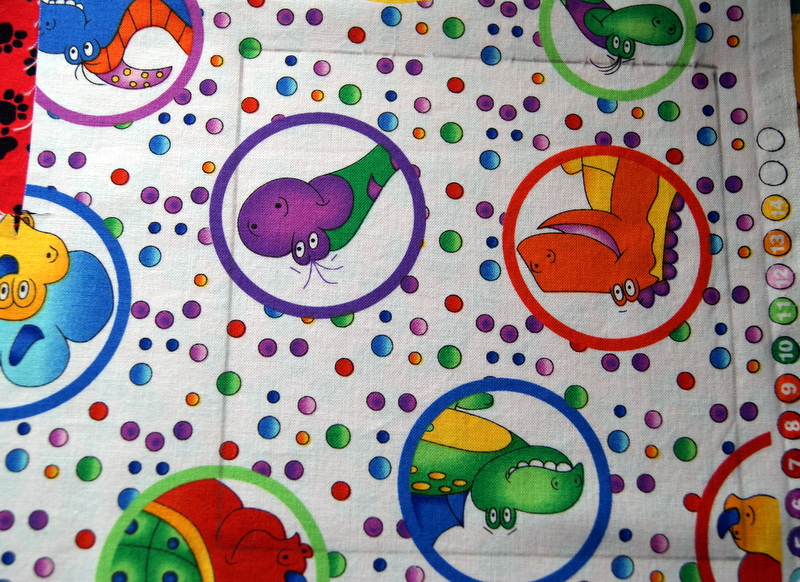
For my samples, I chose two solids that coordinated with two prints and stacked all four fabrics on top of each other.  Then I measured a 5 1/2″ square that I drew on the fabric and with the help of my ruler, I rotary cut out these squares in one quick motion.
SONY DSCSONY DSC

Now simply put right sides together and sew in a 1/2″ seam allowance leaving one side partially unsewn for turning.  I like to sew about a 1″ seam on each side of the opening edge so I don’t have to mess with the corner.  When I make my 1/2″ seam allowances, I sew off the end of the fabric, lift my pressure foot and turn the fabric and continue sewing my seams.  Saves some time.  I will also back-stitch across the seam that I just made to give extra strength to the corners.
SONY DSCSONY DSC

Once I have sewn around all the sides of the square, trim your seams and angle cut your corners.  Before I flip to the right side, I like to press down the opening edge to make the closing seam easier to stitch.  After I have ironed this edge, turn your square to the right side.  Fill it with about 3/4 cup of rice, dried beans or some type of bean bag filler and then sew your opening closed.  I like to stitch a second row on my opening edge for reinforcement since this is an item that gets a lot of use.

SONY DSCSONY DSC

Now have fun tossing them into buckets, boxes, bags, etc. or just on the floor getting different points if your bean bag lands on a solid side or a print side.  Fun game ideas for parties like hot potato, balance on  your head walking across the finish line, tic tac toe style games, etc.

  • TIP:  When using two different fabrics, I like to put a coordinating thread for one fabric in the bobbin and the other coordinating thread for the second fabric in the machine.

HAPPY CREATING!!

Disclaimer:  This post contains affiliate links – “small commission earned”
Sewing a Reversible Placemat

Placemats are so versatile and making them reversible just doubles their use!!  Not only do they serve the great purpose of collecting those crumbs and spills when eating but they can be used as custom decor on your table for a beautiful centerpiece or to add some sparkle if hosting a buffet to use under the various food items that are being served.

In addition, they are extremely easy to make and you can customize or embellish them to match your decor.  You really don’t even need to purchase a pattern.  You can use a placemat that you already have as your pattern or cut out a template from lightweight, unfusible pellon as a pattern.  You can even just use a good ruler to design the style of placemat you want to make.  Probably a good rule of thumb would be to make your rectangular style finished placemat size to be 18″ wide x 13″ long.

So let’s begin.  First select what two fabrics that you want for your placemat.  Keep in mind how you want to clean them.  Are they going to be used as an everyday item, which means you want fabric that can be washed and dried often or just for special occasions.  Cotton fabrics are a super choice, but check out those home dec fabrics too and some non-traditional fabrics like corduroy or faux suede.  Maybe you want a holiday theme for one side and a solid look for the other!!  Anyways, give some good thought to this process.

Cut out your fabric to be 1/2″ larger on all sides, so for a finished 18″ x 13″ size,  you would cut your pattern to be 19″ wide x 14″ long.  I always use a thin batting to be placed in the middle of my fabrics, such as bleached Warm ‘n Natural or Hobbs Heirloom.  Depending upon your fabric, you can add your batting to the wrong side of each piece or maybe you only need batting on one side.  I personally prefer to use non-fusible batting for this project because I feel it will hold up better especially if laundering a lot.

SONY DSC

Preparing to cut fabrics

SONY DSC

Another pic showing how to cut using a ruler


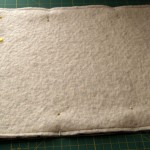
Cut your batting the same size as your cut fabric pieces and baste the batting to the wrong side of your fabric using a 1/4″ seam allowance.

Sewn batting to wrong sides of fabric

Sewn batting to wrong sides of fabric

SONY DSC

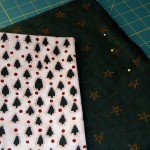
Pinned with right sides together leaving opening for turning


Now, line up your two fabric pieces, right sides together and leave about a 4″ – 5″ opening for turning.  Stitch entire piece in a 1/2″ seam allowance.  You can trim close to the stitching or serge/overlock stitch your edge to have a nice clean seam and again to help eliminate some bulkiness.

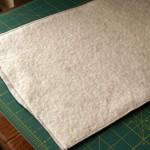
Sewn and trimmed, ready to turn

Sewn and trimmed, ready to turn

SONY DSC

Turned, pressed and ready to do top-stitching


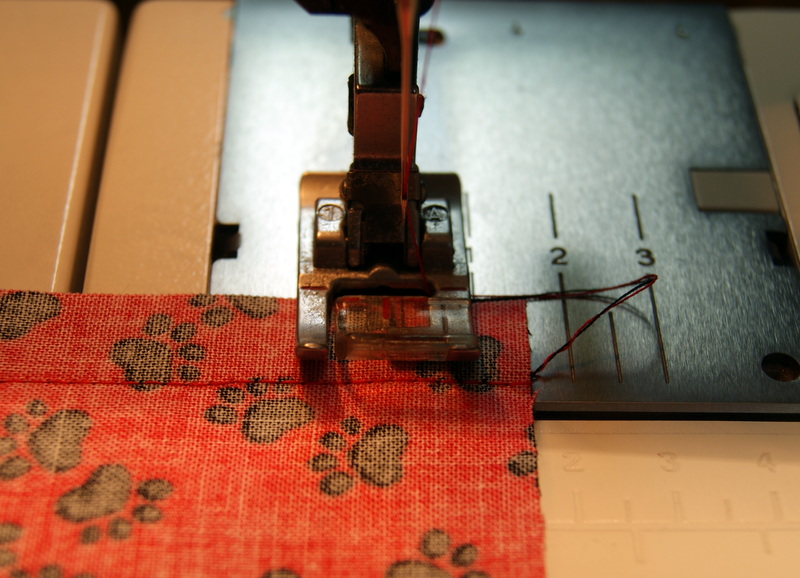
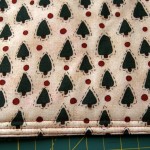
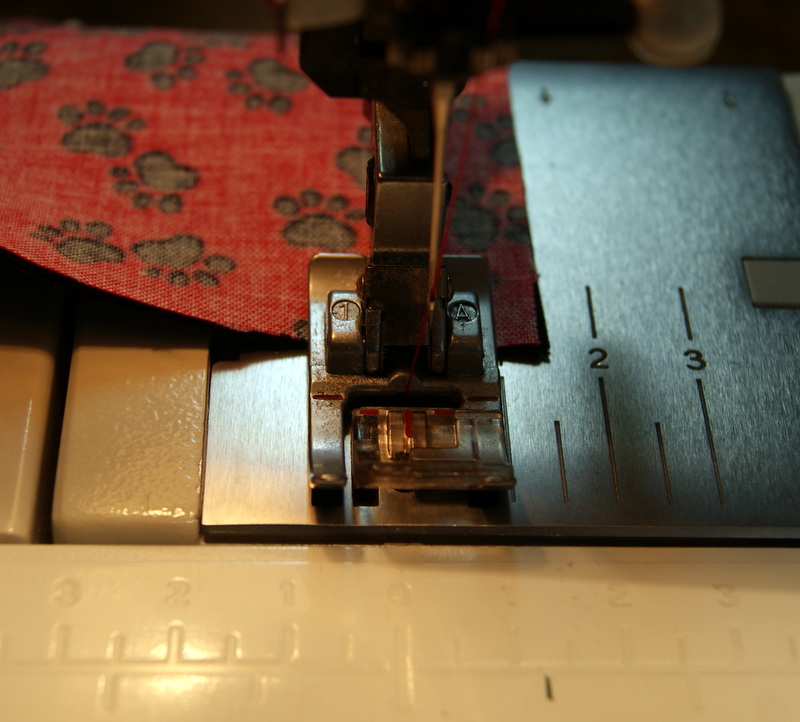
Once turned, fold your opening seams to the inside and press the entire placemat smooth.  Now top-stitch around the entire placemat close to the edge, approximately 1/8″ from finished edge.  Use a good pressure foot that maybe has a marking that you can follow to help keep your stitching line even or use a 1/4″ pressure foot as your stitching guide.  If you decide to use a 1/4″ pressure foot or marking, you might need to do a blind stitch only along the turn opening so it doesn’t separate at that spot.

I always like to make another top-stitching line around the placemat edge about 1/4″ from the first top-stitching line.  Mainly for decorative purposes –  gives a sort of picture frame effect.  Sometimes it is cool looking to even add another top-stitching line 1/4″ from the second stitching line.

Completed top-stitching

Completed top-stitching

Another pic showing three rows of top-stitching

Another pic showing three rows of top-stitching


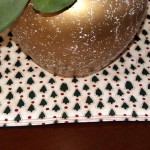
Using this placemat on table under floral arrangement

Using this placemat on table under floral arrangement


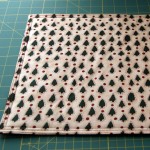
Press again and your placemat is ready for use!!

This  project is perfect for a beginner sewer or a young child who is familiar with a sewing machine and has adult supervision especially using an iron and rotary cutter.  Wonderful gift giving project too.

HAPPY CREATING!!

Disclaimer:  This post contains affiliate links – “small commission earned”
Ups and Downs of Making a Fabric Yo-Yo

Fabric yo-yos are one of the easiest embellishments to make for your special project.  They are also a great way to use up some of those scraps that you have stashed away.  Also, they are a fun thing to do with your child to create a new look.

The yo-yo pattern is a basic circle.  Your circle pattern needs to be twice as wide as you want your finished yo-yo plus a 1/4″ seam allowance.  Once you have determined the size of your yo-yo pattern, draw and cut it out on a piece of heavy stock card paper or use plastic template material found in quilting supplies.  Use a compass to make your circle or trace around something you might have on hand, (a drinking glass, a CD, a tin can) or purchase a  yo-yo maker or a quilter’s template for circles.  Here I used a roll of packing tape!!

Next trace your pattern onto the wrong side of your fabric.  Some fabric choices that work best for making yo-yos are cotton, light weight denim, flannel, wool, light weight corduroy, and felt.  Remember, you will be gathering up your fabric circle to form the yo-yo, so it is best to use lighter weight materials.  Cut out your yo-yo with scissors or a rotary cutter.  Remember, if working with a child you might have to do the cutting.

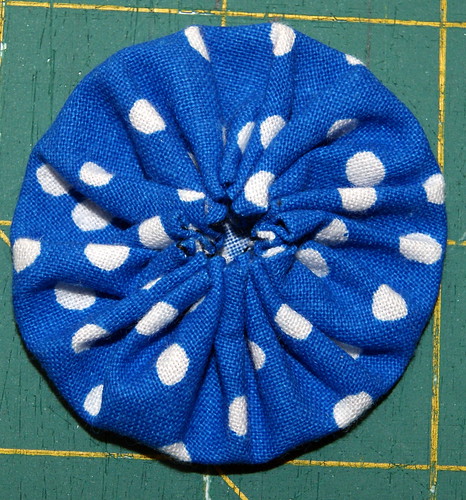
Now you will be folding in your 1/4″ seam allowance onto the wrong side of your fabric with gathering stitches.  You can usually just eyeball your 1/4″ seam allowance, however, if you want to insure your seam allowance is consistent, you can sew a line of stitching 1/4″ from edge of circle and then fold in on that stitch line.  I like to knot one end of my gathering stitch at the beginning and I strongly recommend using a heavy/strong thread for this step.   I have had great success with Dual Duty by Coats and Clark.  Also, keep in mind that short gathering stitches will create a larger, more open center on your yo-yo and longer gathering stitches will make tighter center.  Something to keep in mind when determining what look you want for your finished yoyo.


To begin the gathering, pull the knotted end of thread out about 3-4″ and continue gathering from the other end until you have it as tight as you want.  Once gathered, tie a tight square knot (right over left and then left over right) with your thread for a secure closure.  Flatten and smooth out your finished yo-yo.  Sew on buttons in the center for flowers, make a smaller yo-yo and sew on top of the larger yo-yo for a dimensional effect, make streamers with yarn or threads to hang from the yo-yo itself, let your imagine run wild.

Yo-yos make wonderful appliques (add fabric stems and leaves for flowers), decorate a headband, use them for pins or pocket accents,  or add them to your jeans for a fun look too, the idea list is endless.

HAPPY CREATING!!

Disclaimer:  This post contains affiliate links – “small commission earned”
Sewing Knit Cuffs Picture Tutorial

With cooler weather somewhere around the corner, you might be thinking of sewing some pj’s for the little ones or maybe a pair of “comfy” pants to lounge around in the house.  Adding ribbed knit cuffs to a pattern or even to an already made piece of clothing is not too difficult.

SONY DSC

I particularly like to add them to pajamas to help keep you warmer and I think they are a lot more comfortable than elastic around the wrist or ankle.  You can convert any pattern that calls for elastic at the wrist and make yourself a ribbed cuff in its place.

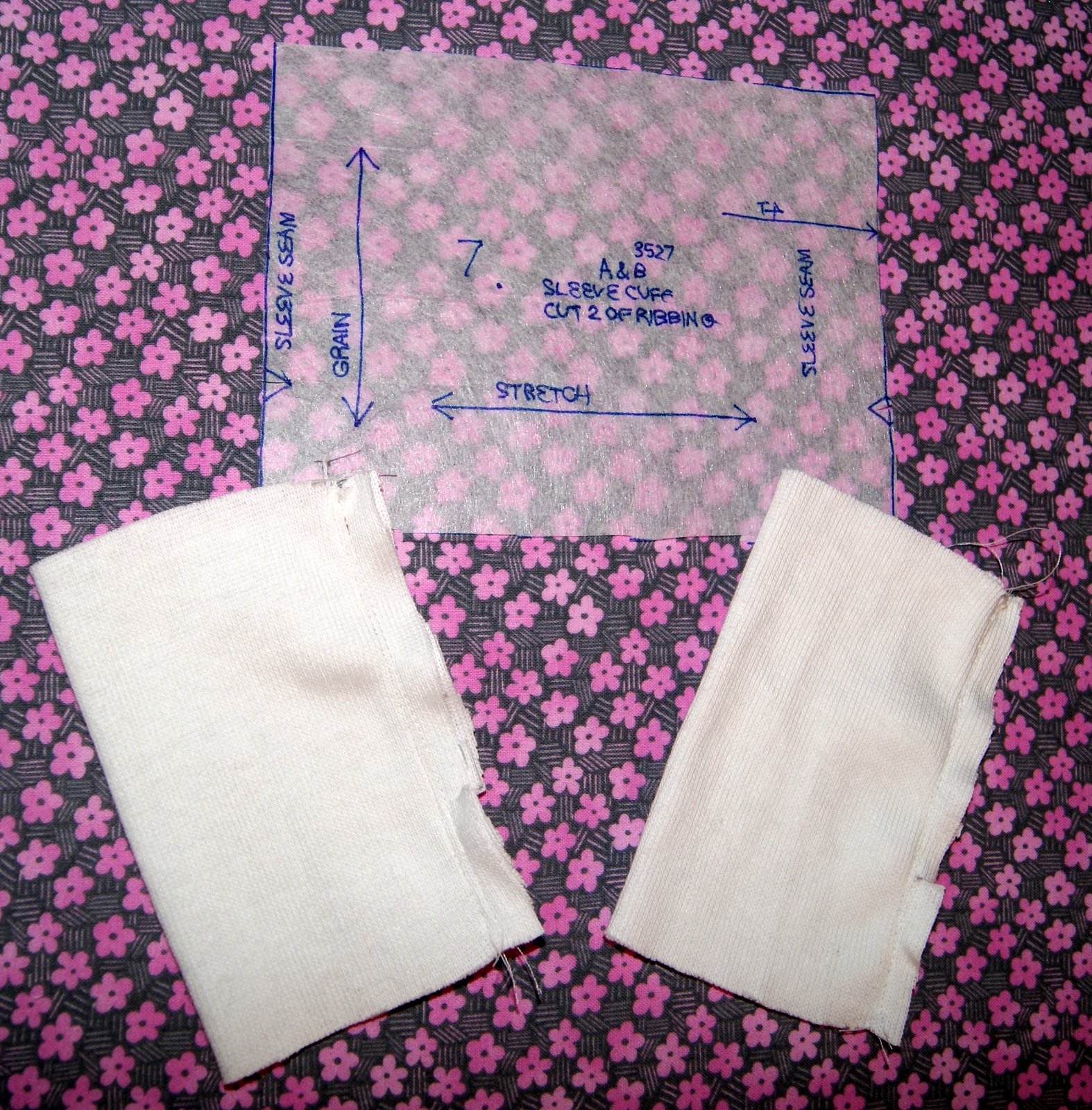
Measure your wrist and/or ankle and add 1″ to that figure.  That calculation will be your width measurement when cutting out your ribbed knit fabric.  The length measurement is kind of a personal preference thing  –  I like to have a finished cuff measure 3″ long, so I will cut my length measurement 7″ long.  This 7″ allows for my cuff to be folded in half ( 3 1/2″) and then allows for a 1/2″ seam allowance.  So whatever your desired finished cuff length is, double that measurement and add 1″ to it for a 1/2″ seam allowance.

SONY DSC

Now that you have your width and length measurements, cut out a paper or pellon pattern to use on the ribbing fabric.  You want the fabric ribs to be going vertical on the cuff with the stretchiest part going horizontal which will be placed along the sleeve or pant edge.  You will need one fabric pattern piece per sleeve or pant leg and cut out 2 of each.

SONY DSC

With right sides together, fold your cuff pattern together with the width end measurements touching.  Sew a narrow 1/4″ seam using a stretch stitch.  Now serge along that same seam or use a narrow zigzag stitch or overcast stitch if you don’t have a serger.  Fold in half, wrong sides together (seam lines matching).   You actually have a cuff ready to be sewn to your garment.

SONY DSC SONY DSC

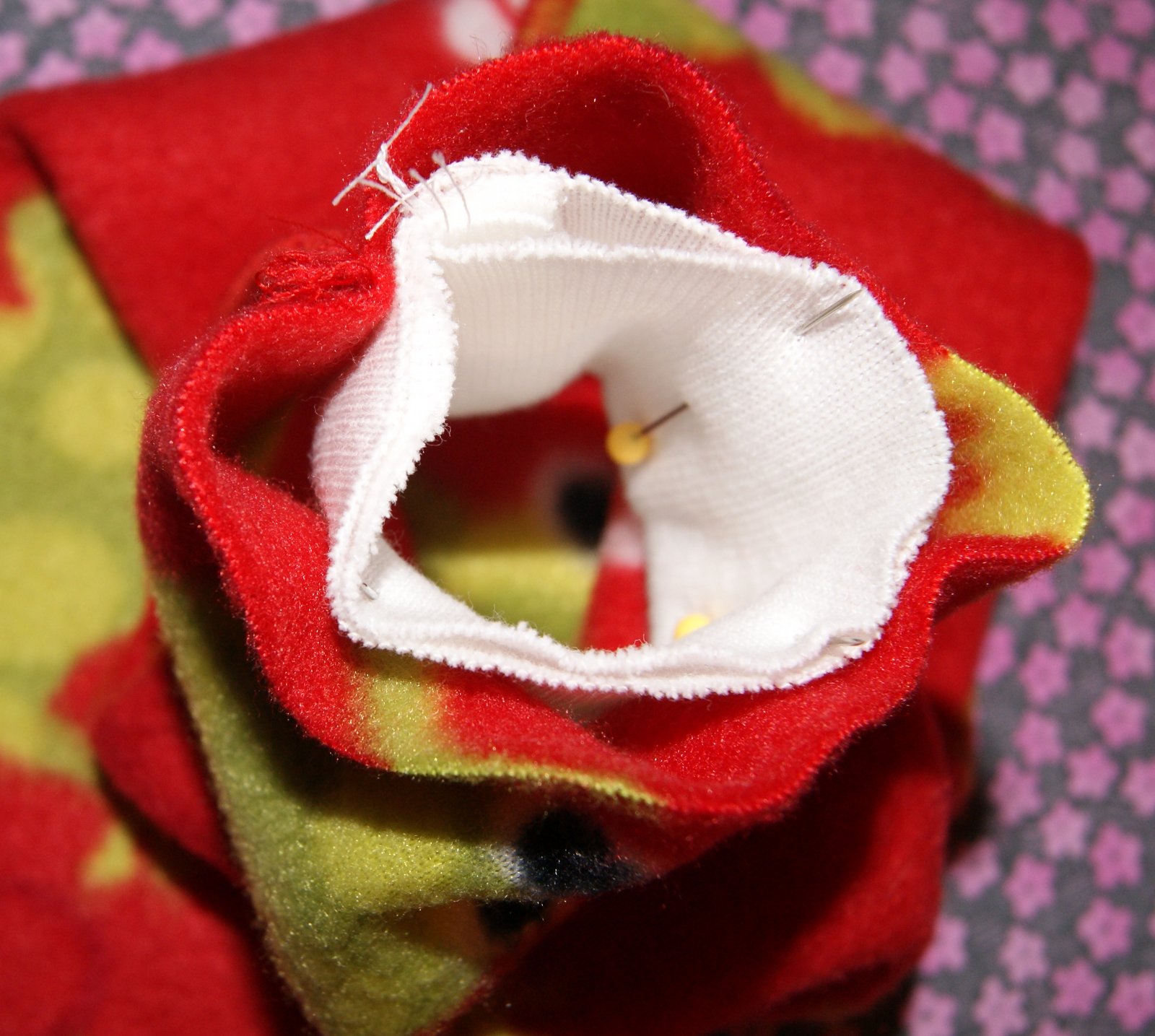
Sew your sleeve or pants together according to your pattern directions, no need for hems or elastic if you are adding the cuffs.   To insure your cuff is evenly spaced around, you will want to mark off your sleeve/pant as well as the cuff into fourths.  Place a pin at the sleeve/pant seam, place another pin at the opposite side of the sleeve/pant, then find center between those two spots and place two more pins one on the top and one on the bottom of the sleeve/pant.  You now have four evenly spaced pin placements to use to match your cuff.  You will do the same thing on the cuff, place a pin at the seam, one directly across from it and then find center on top and bottom of cuff.  Place right sides together matching your pins.   Now you are ready to sew the cuff to your sleeve or pant leg.

SONY DSC

Sewing the cuff to the sleeve/pant itself can be a little tricky because you will need to stretch the cuff but not the sleeve/pant  fabric.  You will keep your sleeve/pant wrong side of fabric against your sewing machine.  The right side will be inside and you will place your cuff inside the sleeve/pant garment for stretching the cuff while your sew.  Match your pin placements with right sides together.

SONY DSCSONY DSC

Beginning at one of the matching pin placements, begin sewing a 1/2″ seam allowance.  Stretch the cuff while you sew so that the second pin placement on the cuff matches to the second pin placement on the sleeve and continue around matching all four pin placements with each other and joining stitching line.  To give your seam a clean finished look, you can serge the seam or stitch with a narrow zigzag or overcast stitch on the edge.

After you have sewn in your cuff, I like to add a decorative stitching on the outside to help hold the serged seam in place.  I sew from the wrong side, holding down the seam and making sure the fabric underneath is smooth and flat.

SONY DSCSONY DSC

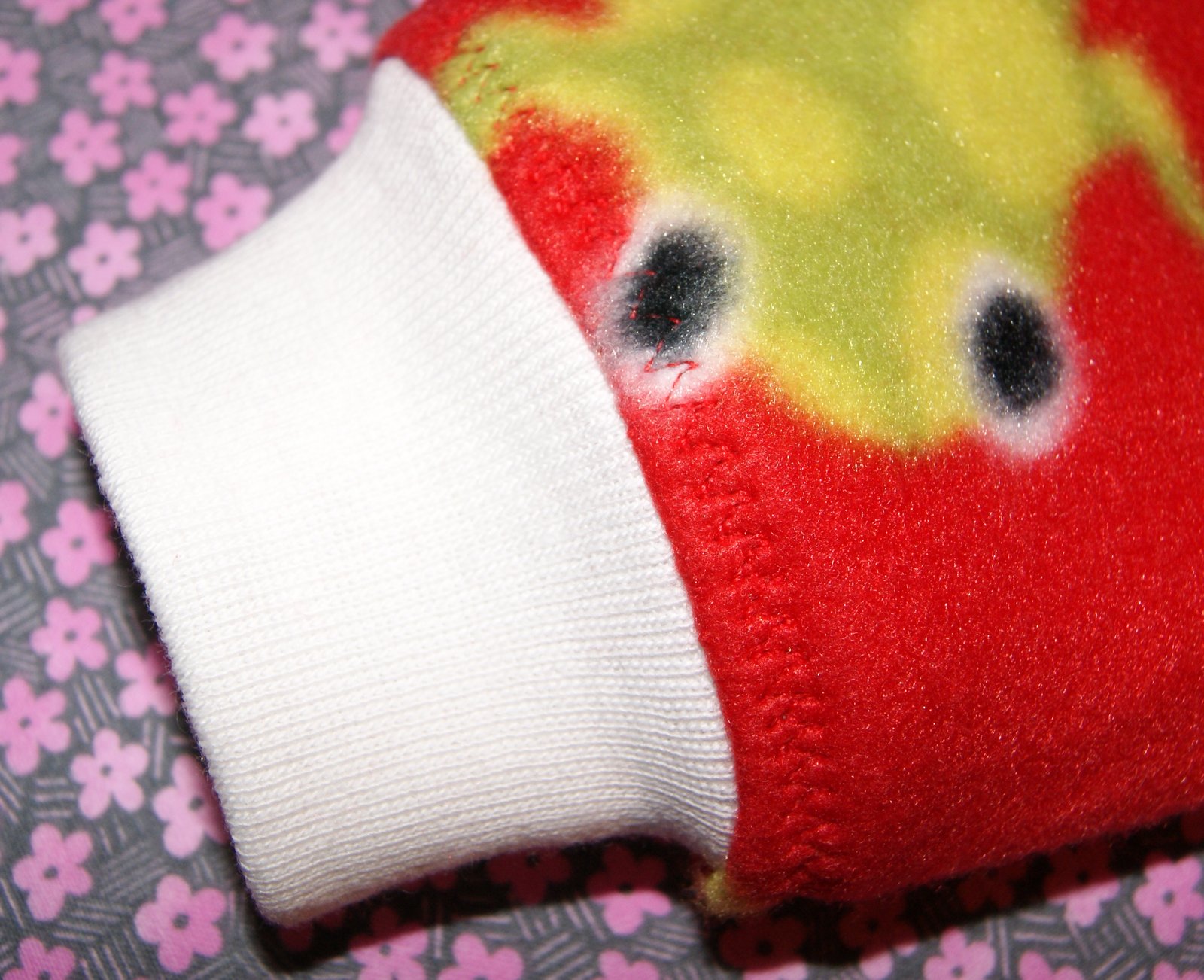
Turn your sleeve right side out and you now have a wonderful cuff attached that will keep cool air out and help sleeve to stay in its place and not fall down over your hand.  I like to add cuffs to pant bottoms too for the same reasons.  If sewing for a child, you can add a little extra length to your pant pattern to allow for growth and the cuff will help to keep that extra length from dragging on the floor.

HAPPY CREATING!!

Disclaimer:  This post contains affiliate links – “small commission earned”