Archives

Magnetic Clasp Sewing Tips

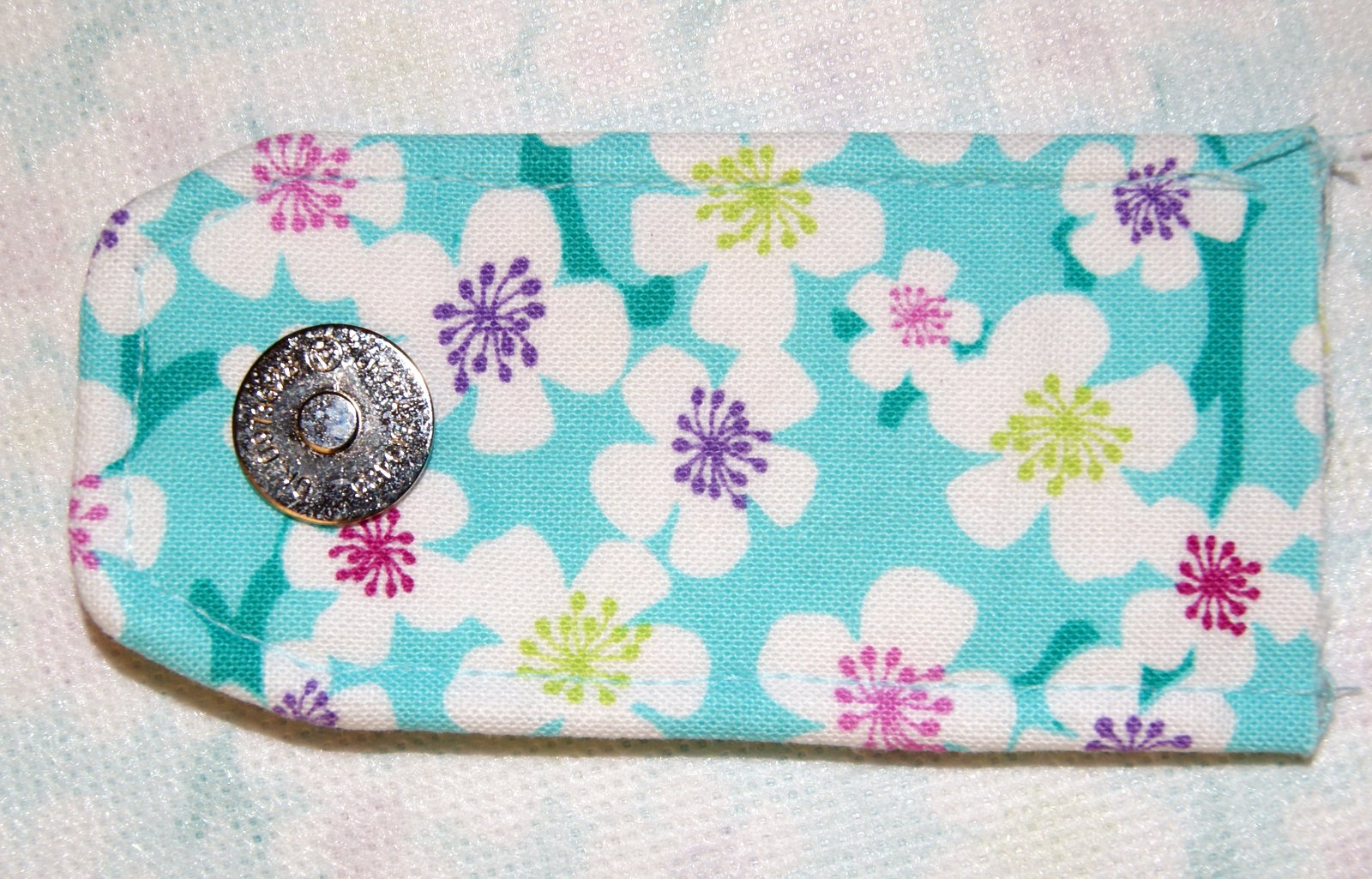
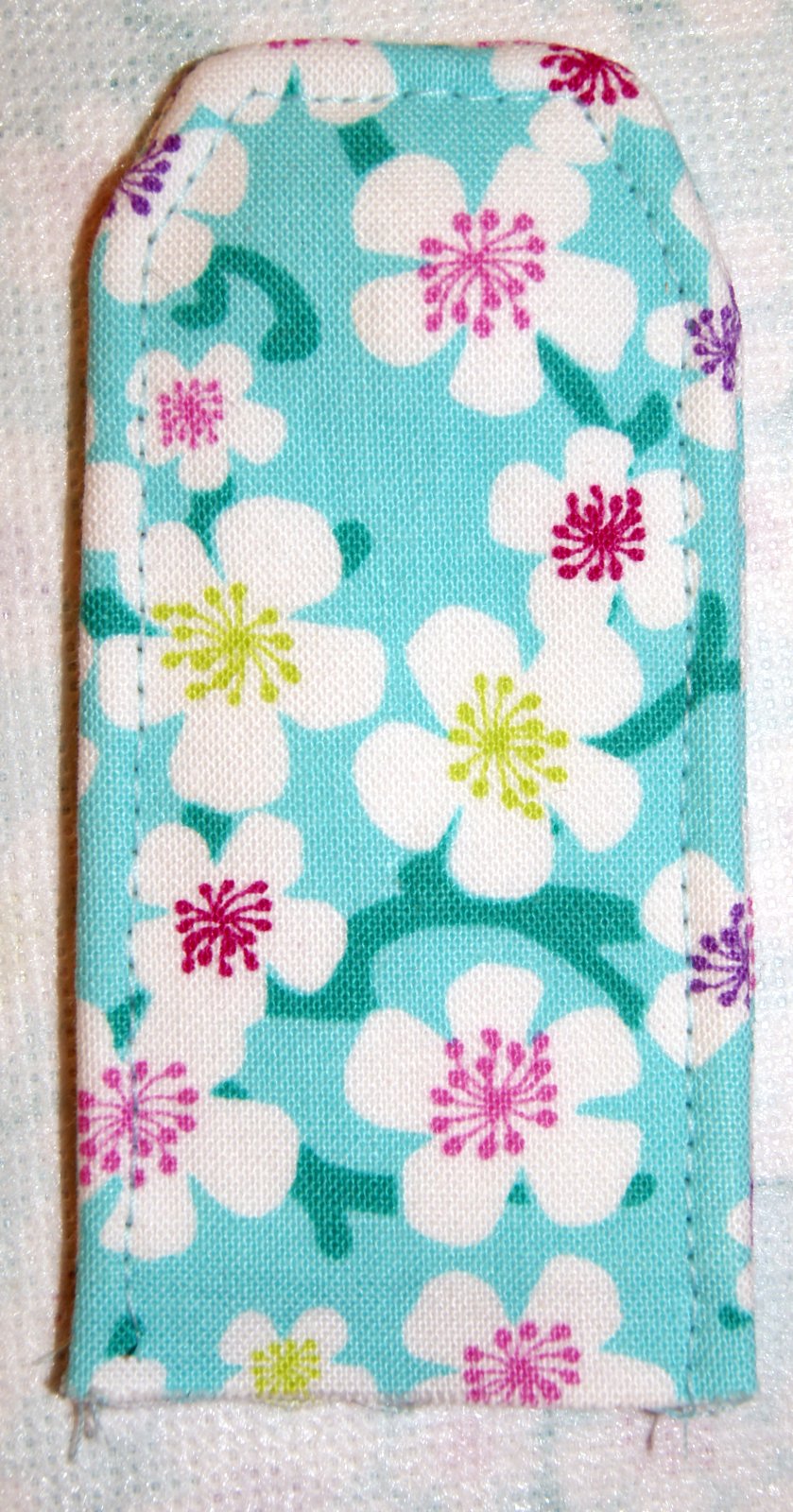
As I have mentioned in my previous post, I like using the magnetic clasps for many projects.  Recently was sewing a very small tab closure and used the tab for one part of the magnetic clasp.  Because I was doing top stitching for a nice finished edge, the metal clasp was on the bottom and would catch on the feed dogs and would slip a little.

SONY DSCSo had to get the creative juices flowing and figure out what I could do to prevent that clasp catching on the feed dogs.  After rummaging through my sewing drawers to see what I had on hand,  I decided to use repositionable scotch tape to place over the magnetic clasp.  Made for a very smooth underside of my tab closure and the clasp slid along the feed dogs without catching!!  Because I used repositionable or removable scotch tape, it left no residue on the clasp or my fabric.

SONY DSCSONY DSC
SONY DSC


Another little tip I find helpful, is to use some iron-on pellon fleece on the wrong side of the fabric that doesn’t hold the magnetic clasp.  It gives a little cushion so that your clasp outline doesn’t show on the right side of your finished work.

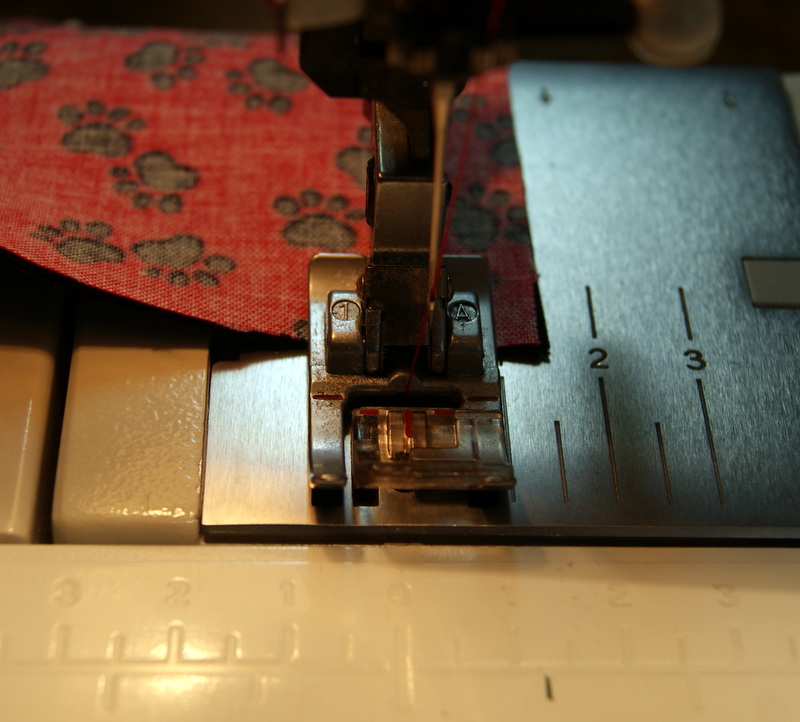
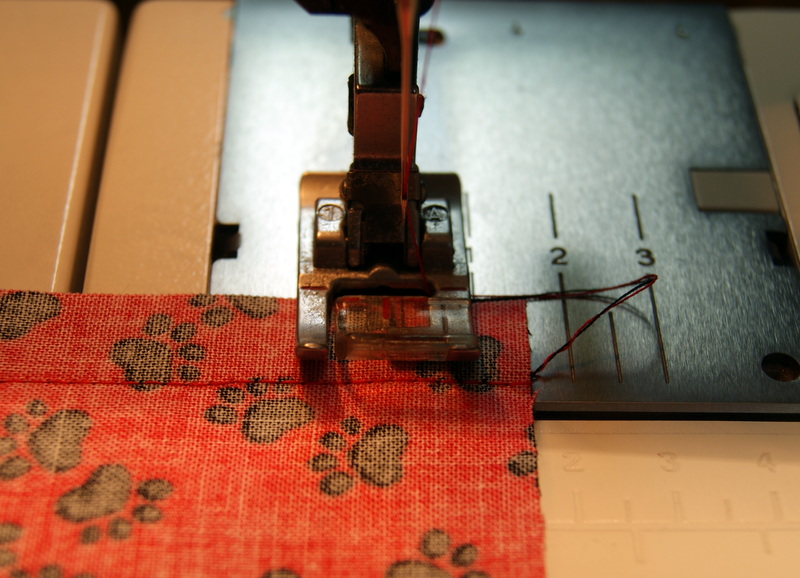
Also, because of the small size of the tab, using my zipper foot kept the pressure foot from resting on the tab too so that my top stitching came out perfect every time!!

SONY DSC

Hope these additional little tips or suggestions will help you too when you are using magnetic clasps for your projects.  🙂

HAPPY CREATING!! 

Disclaimer:  This post contains affiliate links – “small commission earned”


Richard Mille RM Top Replica

Do not know when to start, popular from the phrase “the 21st century is the most expensive, is the value of”, in fact, this is actually quite arbitrary, but want high value, in addition to natural beauty, really need to spend a lot , It really is expensive With the value, must also have a good decoration, or only the value of no temperament, and more no face. Fortunately, if you like super clone RM watches, there are some so good value, the price is not high choice.

Top replica Richard Mille RM watch many styles, to high value, it is too much, and the so-called value, related to the aesthetic, everyone vision is different, difficult to blame, so the flowers into the eyes, you see the pleasing to the eye that is beautiful. This table because the choice is the Tissot movement watch, so with a very clear dynamic elements, whether it is line design or the overall tone, are very sports, but also very fashionable. Watch the disk and bezel, the choice of carbon fiber material unique lines, the high value of no doubt. Another watch is also equipped with 80 hours power movement, coupled with the automatic chain, basically just wear, almost no manual winding, very convenient. Rubber belt with a huge punch design, very motorized style.

Speaking of the most able to reflect the details of the boys dress the taste of a single product, than a delicate and texture of the Fake Richard Mille RM watch watch, like every woman can not have a classic little black dress. The boys for the daily shape is also often followed by less and fine criteria, both hope to gestures without losing personality and taste, but also can easily control a variety of occasions, always enhance their charm of men’s taste.

A person nostalgic or not, from a certain point of view, you can see how deep his feelings of deep. Like the old wine in general, the older the time, the more able to taste its unique aroma. clone watches richard mille is the same, the classic watch, whenever it is worth the taste. In recent days, nostalgic style watch with its classic story once again active in the watch industry.

Mix and match the wind is not to the usual aesthetic standards to match, in terms of design and materials, etc., many friends are more like some of the personality of the watch with, so that can highlight the style of self, and secondly, it is not easy to hit the table, Out of a new sense of fashion. Do not take the unusual way, experience the same wonderful, today for everyone to recommend several super clone watch has its own characteristics, want personalized choice, these watches are good, with more personality, Eye-catching.

Creating Bindings

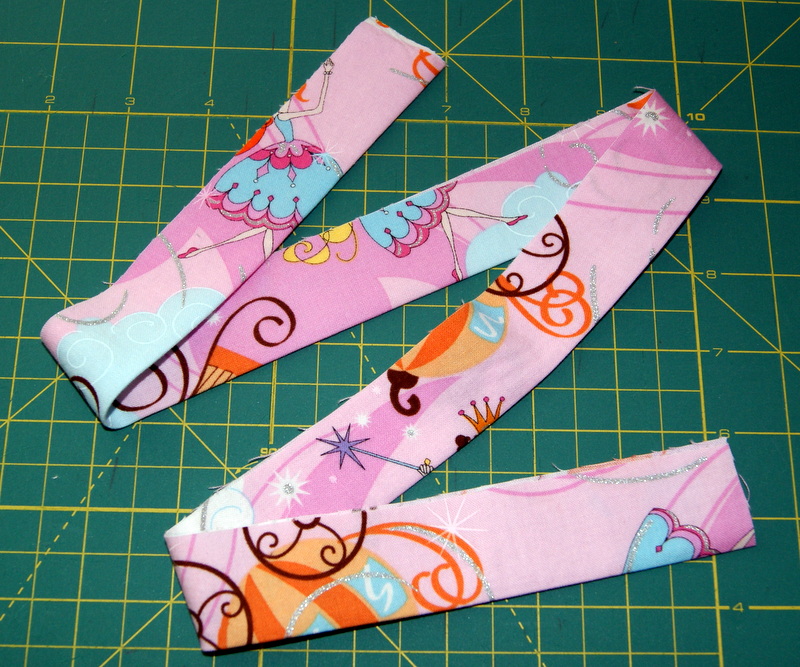
I like to make bindings from my cotton scraps and have them ready in my stash pile for any current or future  sewing projects.  They are not hard to make and it is nice to have a one-of-a-kind trim available.SONY DSC  The type of binding that I am demonstrating is using the straight of grain or lengthwise grain on the fabric.  Good for almost any type of project except a small circle which you might have puckering but a bias type binding would work for those small tight curves.  Cut your strips on the bias (diagonal edge to diagonal edge) and follow these directions to create bias binding.

Using a  2  1/2″ wide cut fabric strip makes for a very nice binding finished width.  What I prefer to do is to rip the cotton fabric on the straight of grain to create my working   2  1/2″ width.  If your scrap piece is not wide enough to rip, then just utilize a good ruler and measure for a  2  1/2″ width using a rotary cutter.  Your cut length can be whatever size you have remaining from your scrap fabric.

Scrap fabric that I will rip into strips.

Scrap fabric that I will rip into strips.

Rotary cutting strip with ruler.

Second side of rotary cutting strip

Second side with rotary cutter.

Rotary cutting strip with ruler


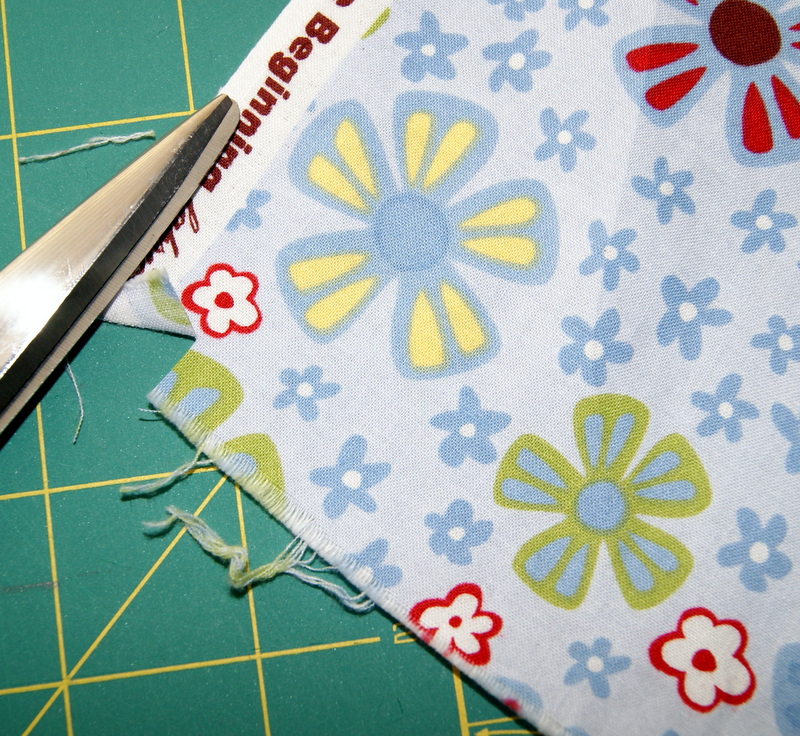
Make a small cut before you rip fabric.

Make a small cut before you rip fabric.

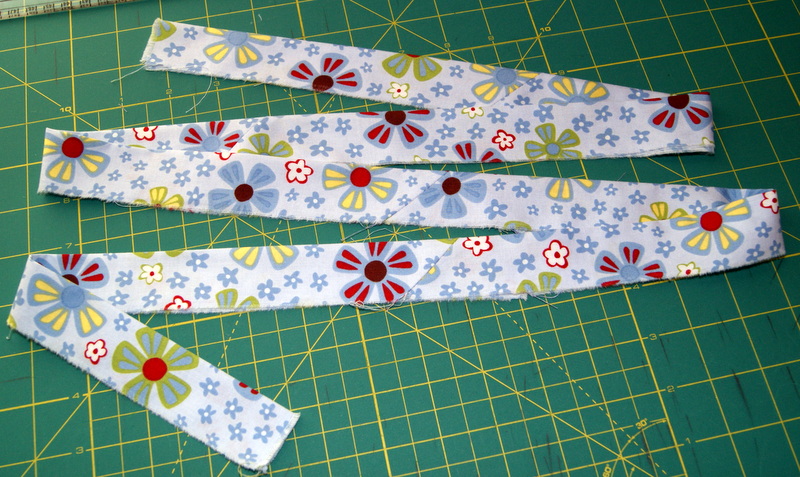
My ripped strips, ready for joining!!

My ripped strips, ready for joining!!


To sew your cut scraps together to form a professional looking seam, you will put right sides together making an upside down “L”.  Take a good ruler, using a pencil or soap, make a stitching line to sew along for a perfect join.  You will then sew from the top edge to the side edge on your binding strip.  Trim your seam close to the stitching line and press seam open.

Stitching from top edge to opposite side edge

Stitching from top edge to opposite side edge

Right sides together forming an upside down n backwards "L"

Right sides together forming an upside down and backwards “L”

Marked seam line

Marked seam line


Trim seam close to stitching and press seam open

Trim seam close to stitching and press seam open

Once you have all your joins stitched together for your binding, fold the strip with wrong sides together and press.

Stitched and pressed with wrong sides together

Stitched and pressed with wrong sides together

This scrap had no joins so just needed to press wrong sides together

This scrap had no joins so just needed to press wrong sides together

Now you have binding that is ready to be sewn to whatever project you are working on.  When sewing the binding to my project, I always use a 1/4″ seam allowance.

Making binding is an easy scrap project for a child who has experience with a sewing machine.  Ripping fabric is a fun thing for a youngster to do.  I wouldn’t suggest letting them use a rotary cutter, only an adult should handle that sewing tool!!

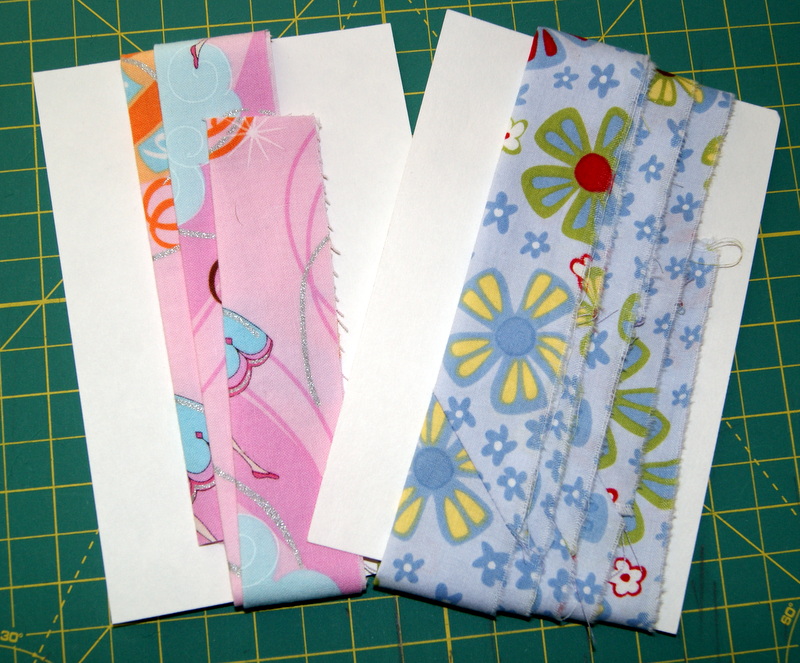
I like to wrap my bindings onto index cards so they can be stored flat in a see thru type storage bin.  You will find many different uses for bindings from quilts, bibs, hooded towels, placemats, clothing,  etc.!!

HAPPY CREATING!!

Disclaimer:  This post contains affiliate links – “small commission earned”


Sewing a Child’s Gathered Skirt with Lace Ruffle

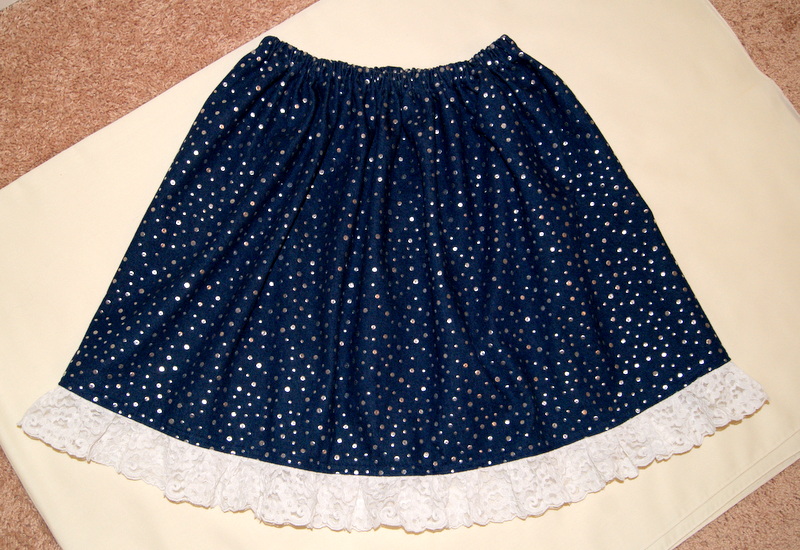
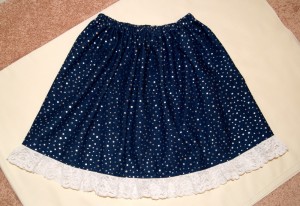
This is an update to my free child’s gathered skirt pattern.  I have included lots of SONY DSC pictures and my sample shows how to attach a lace ruffle to the bottom edge of my denim skirt.  The lace I am working with has a finished edge on both sides, no hemming necessary.
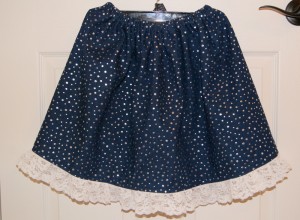
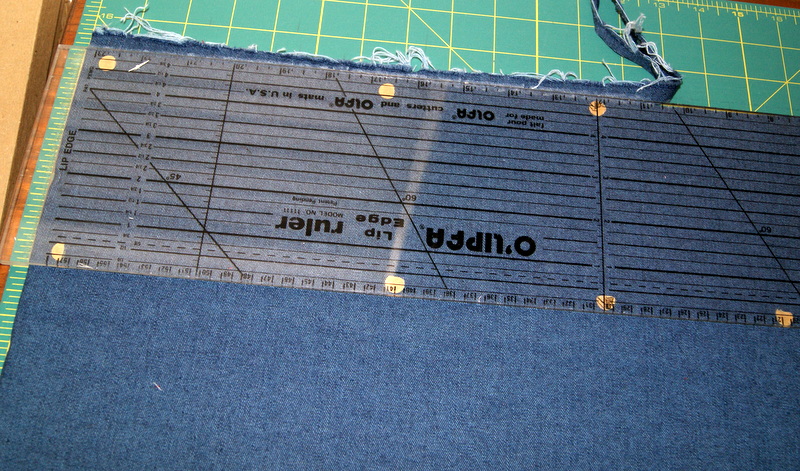
On my pattern page, you will find directions on how to determine your cut width and cut length.   STEP 1:  Be sure to match up the selvage edges together and place that edge along a straight ruler line so that your top and bottom cuts will be even.
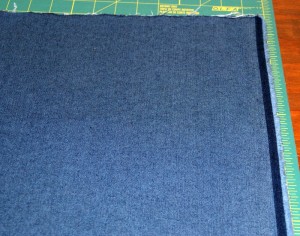
Lining selvages, right sides together, along right edge

Lining selvages, right sides together, along right edge

Line up center fold along straight ruler line for left side.
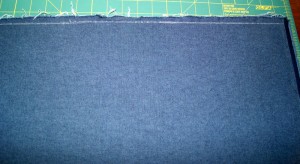
Line up center fold along straight ruler line for left side.

Marking top edge to get ready to cut evenly.

Marking top edge to get ready to cut evenly.

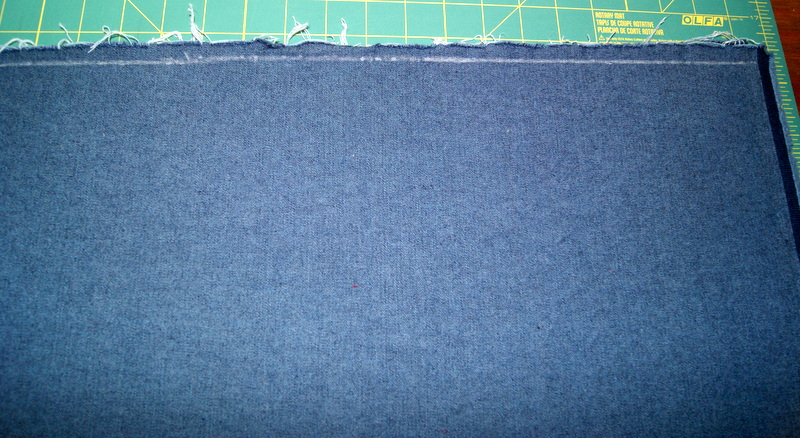
If using a 100% cotton fabric, you can make a small cut along the top and bottom edges and just rip your fabric to get that nice straight of grain edge to work with.
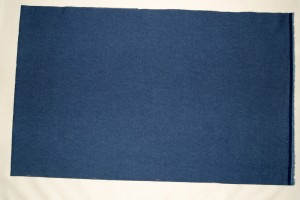
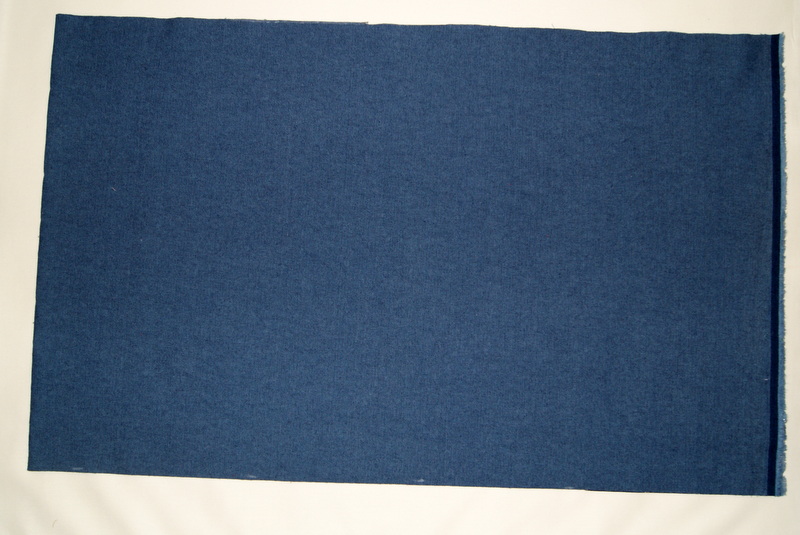
Fabric cut and ready to be sewn.

Fabric cut and ready to be sewn.

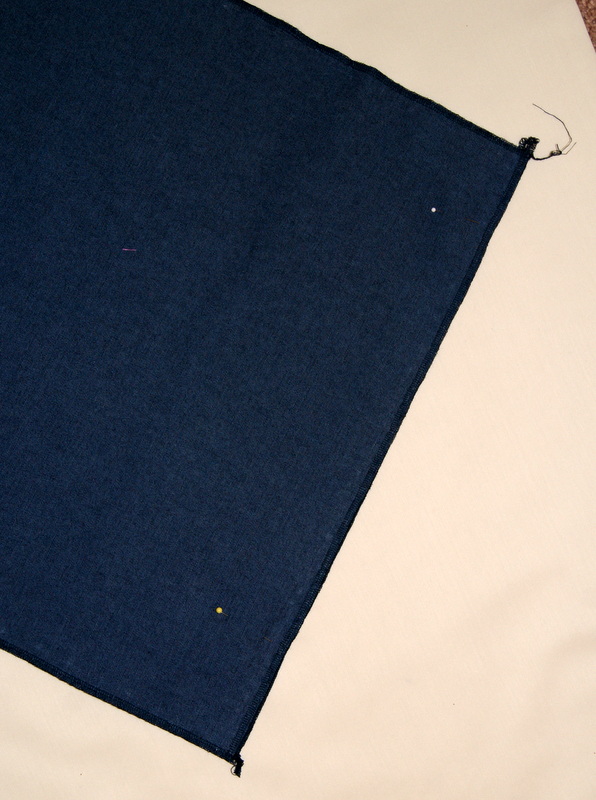
STEP 2:  Once you have your fabric cut, I like to serge all the fabric edges.  I cut off the selvages with my straight ruler before I do the serging.   If you don’t have a serger, you can always do a close zigzag stitch along the raw edges.
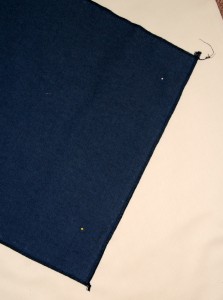
Serged edges
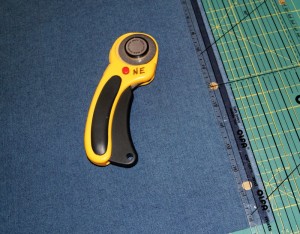
Serged edges

Cutting of the selvage edge to avoid puckering

Cutting of the selvage edge to avoid puckering

STEP 3:  With right sides together, sew a 1/2″ seam allowance.  Press your seam open. STEP 4:  Lay out your skirt and measure from side seam to side seam.  You will want to double that measurement so you have the total circumference of your skirt.  Take that measurement and multiple it by 1.5 up to 2 times to determine how long to cut your lace.
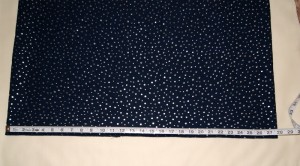
Determining skirt circumference

Determining skirt circumference

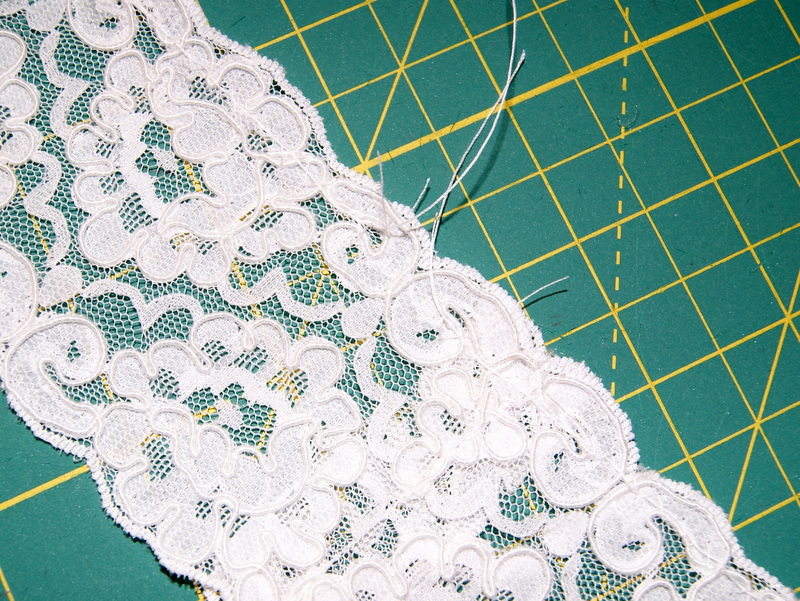
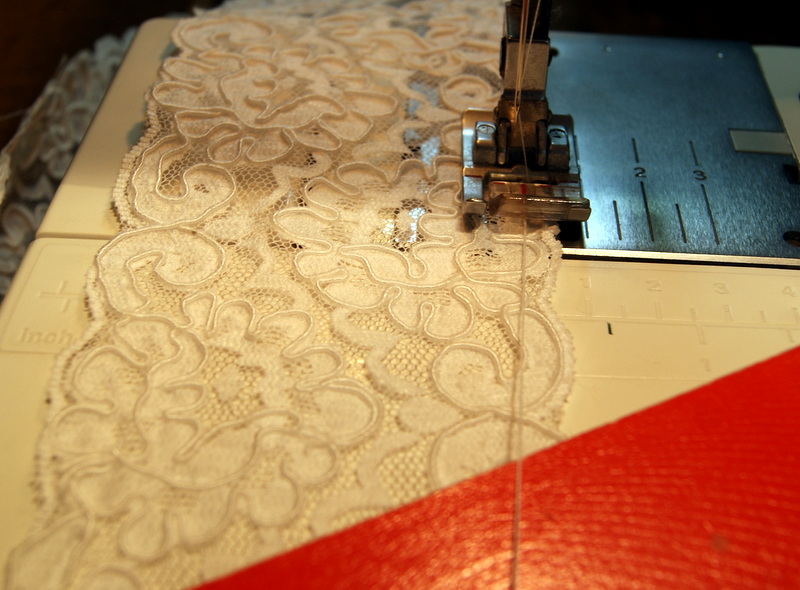
STEP 5:   Cut your lace to the pre-determined measurement and sew it together with right sides matching.   Make a gathering seam by sewing a loose zigzag stitch over top of a heavy-duty (dual duty) thread on the wrong side of the lace.   This makes for a very strong gathering thread that you can pull on very tightly and it will not break.
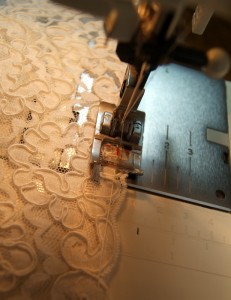
Sewing a zigzag stitch over heavy duty thread
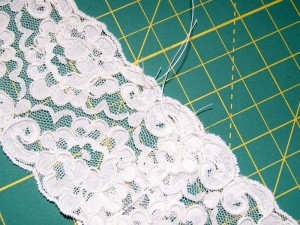
Sewing a zigzag stitch over heavy duty thread

Lace ready to be gathered
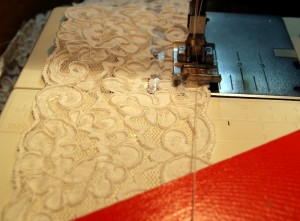
Lace ready to be gathered

Showing how close to the edge of lace I sewed gathering thread

Showing how close to the edge of lace I sewed gathering thread

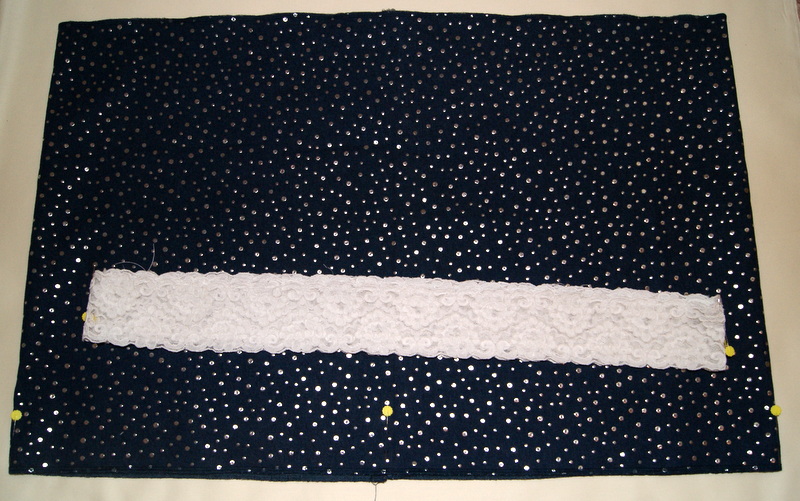
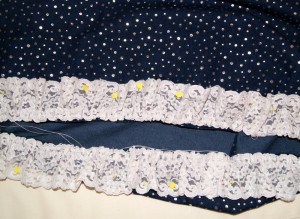
STEP 6:  Divide your skirt into fourths, placing a pin at the center back seam, center front seam and both sides.  You will also fold your lace into fourths and place pins at each fold.  Now with right sides together, pin your lace markings to the skirt markings.   Pull snuggly on one heavy duty gathering thread and pin your gathers from center back to center front on one side.  Now repeat that step for the other side, pulling snuggly using the other heavy duty gathering thread to gather up the lace and pin to the skirt.  Stitch in place.
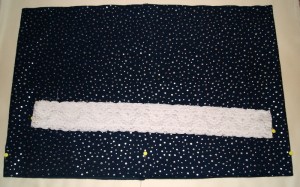
Marking for lace placement
Marking for lace placement

Gathered lace ready to be sewn
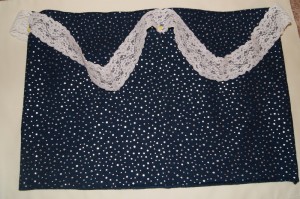
Gathered lace ready to be sewn

Attaching lace to pin markings before gathering

Attaching lace to pin markings before gathering


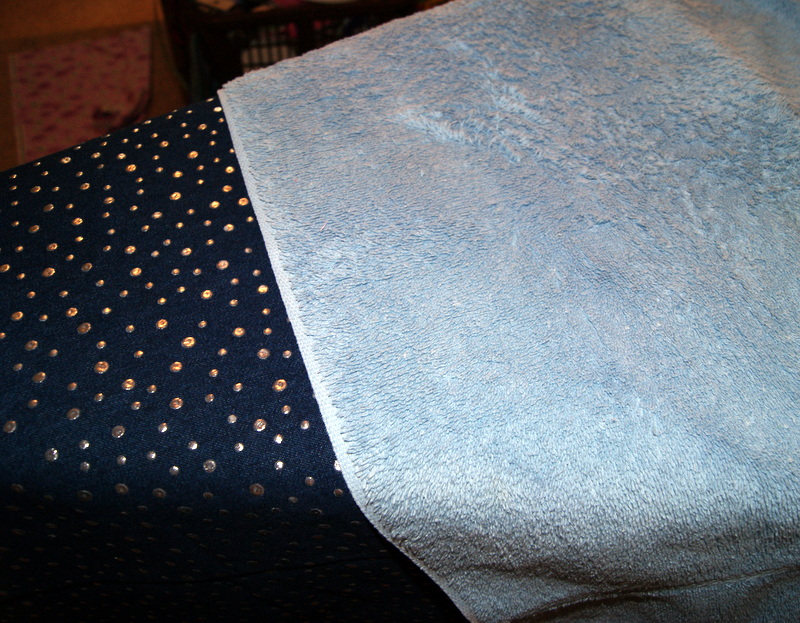
STEP 7:  You want to press that seam up towards the top of the skirt.  Because my denim had painted silver dots on it and the lace was somewhat delicate, I used a terry cloth towel as my pressing cloth so as not to have any damage (melted dots or lace)!!    STEP 8:  After the seam is pressed up, stitch that seam in place.  I made two (2) rows of stitching because I like that look.  One row of stitching is sufficient.
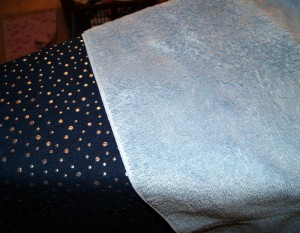
Using a pressing cloth

Using a pressing cloth

Double stitched row

Double stitched row


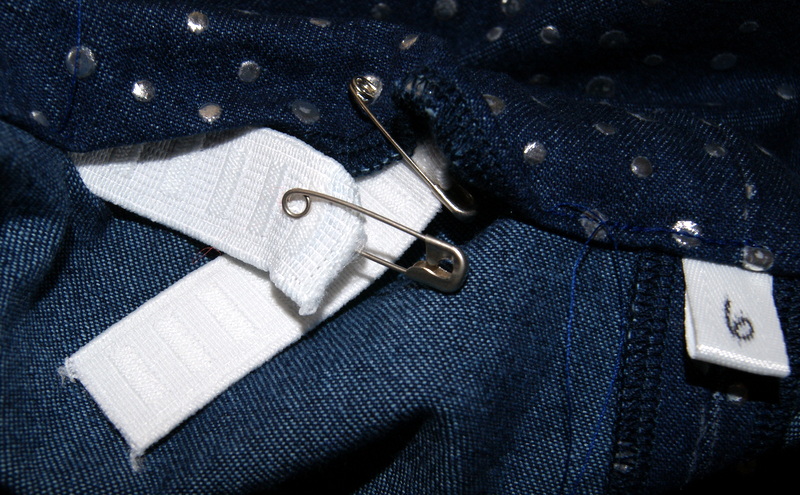
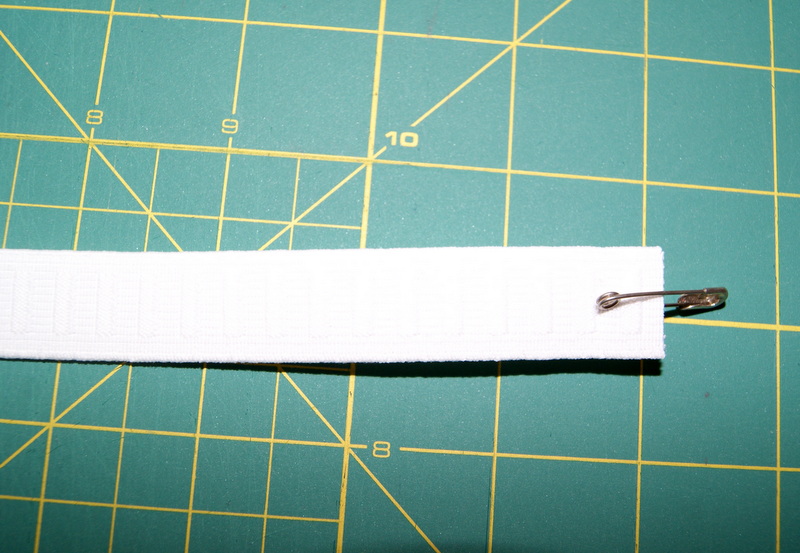
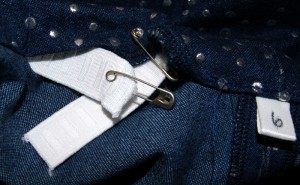
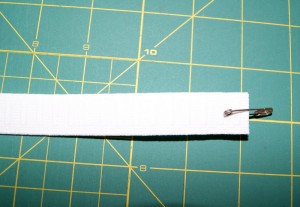
STEP 9:  Make the casing for the elastic by folding down the top edge of the skirt 1  1/2″.  Pin in place at the folded edge and turn under the serged edge as you stitch leaving about a 2″ opening to pull your elastic through.  Attach a safety-pin to one end of your 3/4″ non-roll elastic and begin pulling it through the casing.  So I wouldn’t pull the end of the elastic into my casing, I pinned it to the opening.  Once you have pulled the elastic through the entire casing, over lap it about 1/2″ on each side and stitch securely into place.  Make sure you haven’t twisted the elastic before sewing.  After stitched, pull on the waist band so the elastic is nicely tucked inside and stitch close your opening.
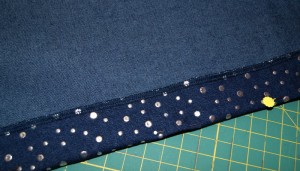
Folding down your casing
Folding down your casing

Beginning elastic meeting pulled through elastic
Beginning elastic meeting pulled through elastic

Attach safety pin as your gathering tool

Attach safety-pin as your gathering tool

STEP 10:  To help keep your gathers in place, make a stitching line at the center back, center front, and both sides.  Stitch from the top of the waist band to the stitching  line of the casing (sewing through all thicknesses).
SONY DSC

 HAPPY CREATING!!

Disclaimer:  This post contains affiliate links – “small commission earned”
How to Sew Bean Bags

What child doesn’t LOVE to toss around squishy little bean bags!!  Here’s some quick tips on how to make these cute, fun bags.

SONY DSC

I just use cotton fabric from my very large scrap bin but just about any type of fabric will work.  I personally like to mix solids with prints because it gives more options to vary up game ideas.SONY DSC

For my samples, I chose two solids that coordinated with two prints and stacked all four fabrics on top of each other.  Then I measured a 5 1/2″ square that I drew on the fabric and with the help of my ruler, I rotary cut out these squares in one quick motion.

SONY DSCSONY DSC

Now simply put right sides together and sew in a 1/2″ seam allowance leaving one side partially unsewn for turning.  I like to sew about a 1″ seam on each side of the opening edge so I don’t have to mess with the corner.  When I make my 1/2″ seam allowances, I sew off the end of the fabric, lift my pressure foot and turn the fabric and continue sewing my seams.  Saves some time.  I will also back-stitch across the seam that I just made to give extra strength to the corners.

SONY DSCSONY DSC

Once I have sewn around all the sides of the square, trim your seams and angle cut your corners.  Before I flip to the right side, I like to press down the opening edge to make the closing seam easier to stitch.  After I have ironed this edge, turn your square to the right side.  Fill it with about 3/4 cup of rice, dried beans or some type of bean bag filler and then sew your opening closed.  I like to stitch a second row on my opening edge for reinforcement since this is an item that gets a lot of use.

SONY DSCSONY DSC

Now have fun tossing them into buckets, boxes, bags, etc. or just on the floor getting different points if your bean bag lands on a solid side or a print side.  Fun game ideas for parties like hot potato, balance on  your head walking across the finish line, tic tac toe style games, etc.
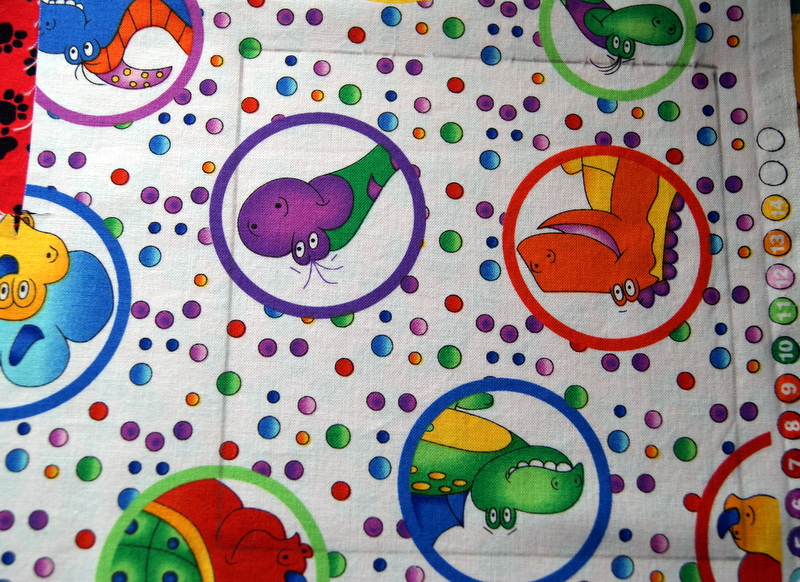
  • TIP:  When using two different fabrics, I like to put a coordinating thread for one fabric in the bobbin and the other coordinating thread for the second fabric in the machine.

HAPPY CREATING!!

Disclaimer:  This post contains affiliate links – “small commission earned”