Archives

Fabric Scraps for Kids

If you are a sewer or quilter and have fabric scraphobia (can’t bear to throw away any leftover fabric) then maybe you should start a “scrappy” bin for that young child to use for their creative moments!!
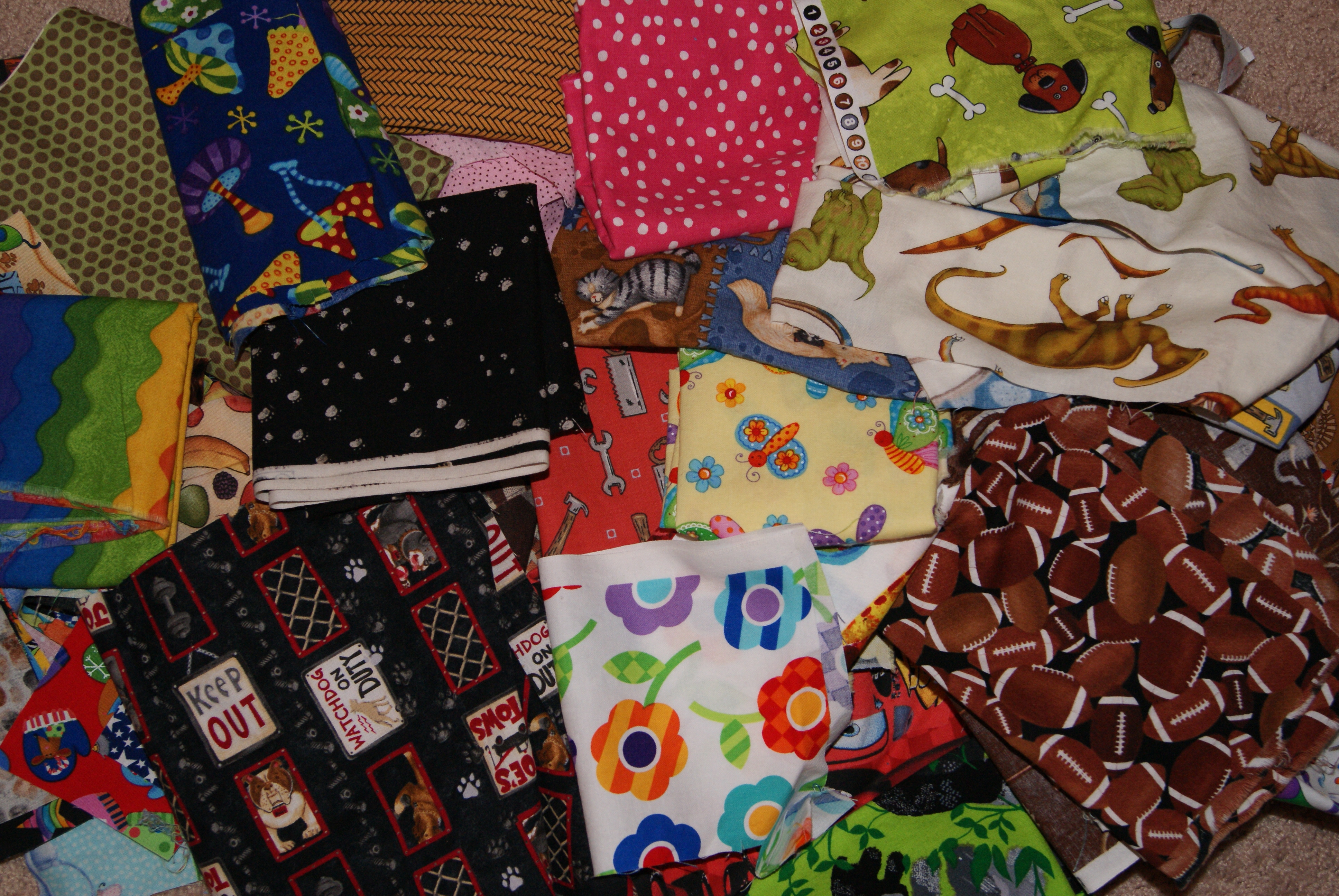
I definitely have SCRAPHOBIA!!

I definitely have
SCRAPHOBIA!!


Nothing more exciting than rummaging through a big pile of fabric to pick out those special colors or textures to create with.  Using scraps is a great way to introduce the sewing machine to a youngster with adult supervision close by.

Let them select about a dozen different fabrics and sort them out into two piles – light colors and darker colors.  Then cut out a wide selection of squares and/or rectangles.   Designing  a template for them to trace their shapes onto the wrong side of the fabric helps with the cutting process.
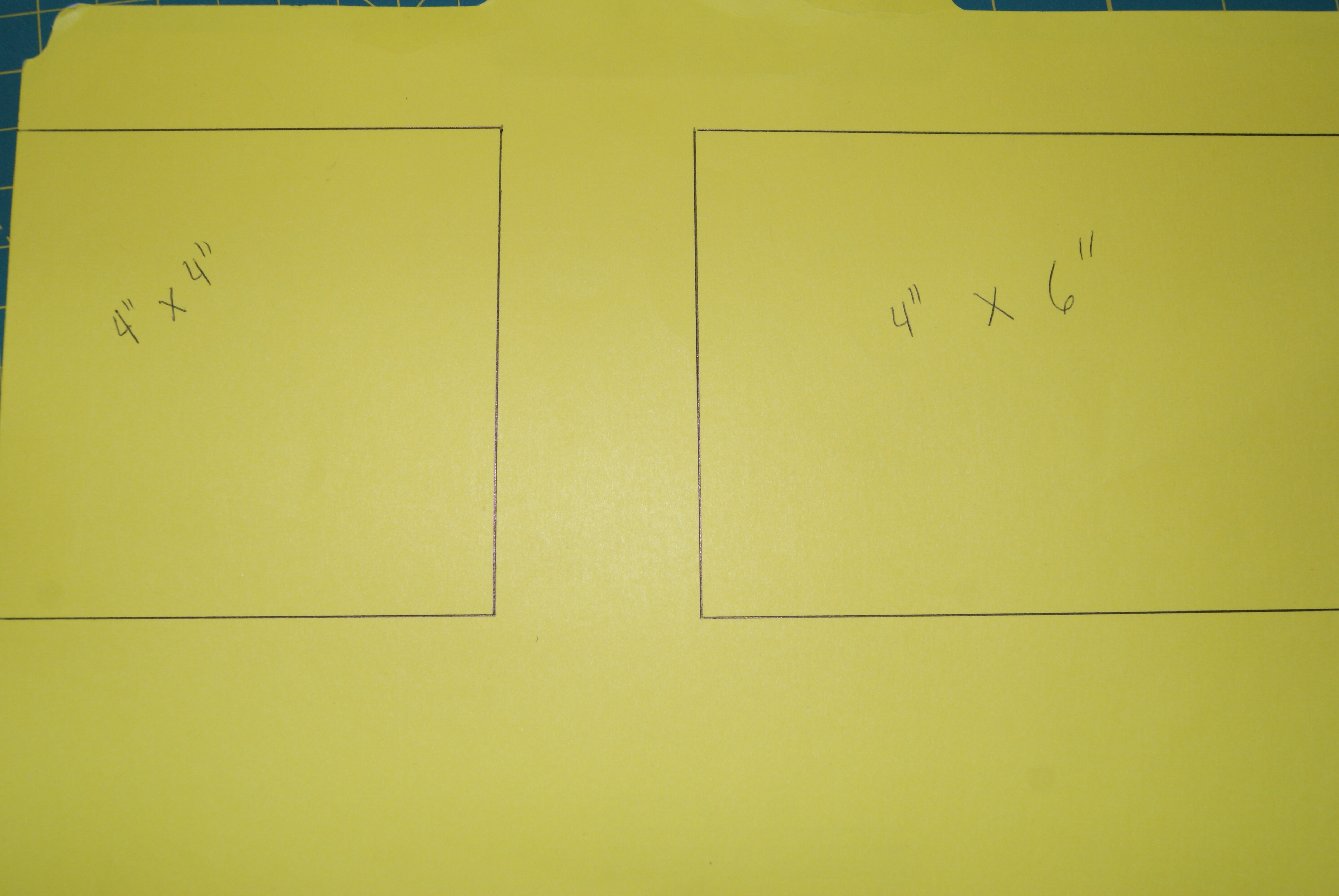
Used an old file folder to make my template guide.

Used an old file folder to make my template guide.

Remember to include a 1/2″ seam allowance on all sides of your template.   Try to keep the fabric squares or rectangles a good workable size; something like 4″ x 4″ and 4″ x 6″.  Easier for their little fingers.

Now begin sewing the fabric shapes together in whatever design that appeals to the child.  Let them think “outside the box” and use their imagination for their finished scrap fabric project.   They might want to create a blanket for a baby doll or stuffed animal or maybe their design will be a cool “shawl” for those dress up games!!

You could finish all the edges of the scrap fabric design with just a simple zigzag stitch.  Or if your children is more experienced, cut out a light weight batting and backing; then stitch together on three sides (right sides together) with the batting in the middle.  Turn to the right side and machine stitch closed to make a scrappy little quilt that they could tie together.

Have loads of fun!  Exposing your child to new craft techniques makes for wonderful memories too!!

HAPPY CREATING!!

Disclaimer:  This post contains affiliate links – “small commission earned”
Sewing a Reversible Placemat

Placemats are so versatile and making them reversible just doubles their use!!  Not only do they serve the great purpose of collecting those crumbs and spills when eating but they can be used as custom decor on your table for a beautiful centerpiece or to add some sparkle if hosting a buffet to use under the various food items that are being served.

In addition, they are extremely easy to make and you can customize or embellish them to match your decor.  You really don’t even need to purchase a pattern.  You can use a placemat that you already have as your pattern or cut out a template from lightweight, unfusible pellon as a pattern.  You can even just use a good ruler to design the style of placemat you want to make.  Probably a good rule of thumb would be to make your rectangular style finished placemat size to be 18″ wide x 13″ long.

So let’s begin.  First select what two fabrics that you want for your placemat.  Keep in mind how you want to clean them.  Are they going to be used as an everyday item, which means you want fabric that can be washed and dried often or just for special occasions.  Cotton fabrics are a super choice, but check out those home dec fabrics too and some non-traditional fabrics like corduroy or faux suede.  Maybe you want a holiday theme for one side and a solid look for the other!!  Anyways, give some good thought to this process.

Cut out your fabric to be 1/2″ larger on all sides, so for a finished 18″ x 13″ size,  you would cut your pattern to be 19″ wide x 14″ long.  I always use a thin batting to be placed in the middle of my fabrics, such as bleached Warm ‘n Natural or Hobbs Heirloom.  Depending upon your fabric, you can add your batting to the wrong side of each piece or maybe you only need batting on one side.  I personally prefer to use non-fusible batting for this project because I feel it will hold up better especially if laundering a lot.

SONY DSC

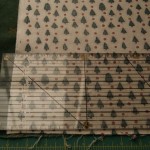
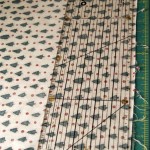
Preparing to cut fabrics

SONY DSC

Another pic showing how to cut using a ruler


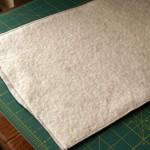
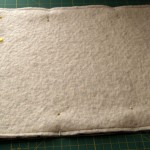
Cut your batting the same size as your cut fabric pieces and baste the batting to the wrong side of your fabric using a 1/4″ seam allowance.

Sewn batting to wrong sides of fabric

Sewn batting to wrong sides of fabric

SONY DSC

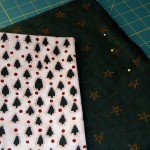
Pinned with right sides together leaving opening for turning


Now, line up your two fabric pieces, right sides together and leave about a 4″ – 5″ opening for turning.  Stitch entire piece in a 1/2″ seam allowance.  You can trim close to the stitching or serge/overlock stitch your edge to have a nice clean seam and again to help eliminate some bulkiness.

Sewn and trimmed, ready to turn

Sewn and trimmed, ready to turn

SONY DSC

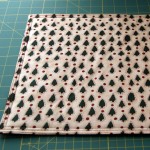
Turned, pressed and ready to do top-stitching


Once turned, fold your opening seams to the inside and press the entire placemat smooth.  Now top-stitch around the entire placemat close to the edge, approximately 1/8″ from finished edge.  Use a good pressure foot that maybe has a marking that you can follow to help keep your stitching line even or use a 1/4″ pressure foot as your stitching guide.  If you decide to use a 1/4″ pressure foot or marking, you might need to do a blind stitch only along the turn opening so it doesn’t separate at that spot.

I always like to make another top-stitching line around the placemat edge about 1/4″ from the first top-stitching line.  Mainly for decorative purposes –  gives a sort of picture frame effect.  Sometimes it is cool looking to even add another top-stitching line 1/4″ from the second stitching line.

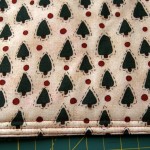
Completed top-stitching

Completed top-stitching

Another pic showing three rows of top-stitching

Another pic showing three rows of top-stitching


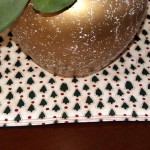
Using this placemat on table under floral arrangement

Using this placemat on table under floral arrangement


Press again and your placemat is ready for use!!

This  project is perfect for a beginner sewer or a young child who is familiar with a sewing machine and has adult supervision especially using an iron and rotary cutter.  Wonderful gift giving project too.

HAPPY CREATING!!

Disclaimer:  This post contains affiliate links – “small commission earned”
Sewing Pajamas for Christmas Eve

I have made new pajamas every Christmas for my daughters, which has become a tradition and one that can easily be passed on.

Sometimes I buy a new pajama pattern or if I have a pattern with different views, I sew a style I haven’t made.  If reusing a pattern, it is easy to adjust a pajama pattern if you need to add length for growth.  You will find add length lines on the pattern pieces, cut along these lines and spread your pieces apart the 1 or 2 inches that you might need.  Just make sure you use a tape measure so that your pattern pieces are evenly spaced for the length adjustments. The pattern directions will also explain how to lengthen or shorten your pattern pieces.

I like to use flannel when making pajamas.  Washes and dries wonderfully, soft and cozy for sleeping and lots of different colors and patterns to choose from.  I always purchase about a half yard and sometimes a yard more than the pattern calls for to allow for shrinkage (I always pre-wash my fabrics) and fabric doesn’t always come in 44″-45″ wide.  Most often the fabric is only 40″-42″ wide but the yardage requirements on the pattern itself are always for the 44″-45″ measurement.  You can always create something from the left over fabric but very disappointing and frustrating to not have enough!

Adding embellishments is the fun part.  Adding unique buttons, sew some fun lace along gown bottom edge or sleeve edge or even along the top edge of a pocket, make ribbon bows and add them along the neck line, embellish with yo-yos, or maybe a special appliqué like an initial on a pocket front to personalize the pajamas!

For me the best part was allowing my daughters to open their special pajamas on Christmas Eve, sending them off to bed wearing new cozy pjs with visions of sugar plums and knowing how cute they would look for the next morning pictures!!

  • TIP:   Refer to “My Favorite Things” for different on-line fabric stores that carry a wide variety of flannel fabric.

HAPPY CREATING!!

Disclaimer:  This post contains affiliate links – “small commission earned”
OoLaLa Self-Healing Cutting Mats

FINALLY, after 12 years of almost everyday use,  I disposed of my old self-healing mat by Olfa and purchased a brand new smooth, shiny one!!!  So now my pictures will have a pretty background.  Still has that new “stinky” smell, which I will help alleviate by rubbing it down with 1 part water to 1 part white vinegar.

I just love having ready access to this mat.  The one I use consistently is the 18″ x 24″ size.  My serger table, designed by me and built by my talented hubby, has an extended side which this mat fits on perfectly.  So I have it readily available for trimming seams, cutting out fabric, designing patterns, working on crafts, whatever is happening in my sewing room.

I have the small version and the extra-large mat too.  Can you tell that I just love using these mats.  The smaller size is great for any sewing/quilting classes, fits easily into a tote for commuting and doesn’t take up a large space when sharing a table with other people in your class.

The extra-large mat is a good to use for actually cutting out your fabric and patterns.  Works great on a kitchen table, especially if you have limited space for preparing sewing projects.

These mats store away easily but you do want to insure that you don’t fold or bend them.  They will stand nicely behind a storage bin or slid easily behind a bookcase.  You don’t want them to come into direct contact with the hot sun or a heating vent.  If left in a car, for example, the hot sun can actually distort the mat causing it to bend out of shape and you can never, I mean never, get it back flat again!!

If you have the space, there is a very, very large self-healing mat that is wonderful for doing drapery treatments or cutting out several patterns at once.  The measurement size on the mat itself is 44″w  x  92″ long, marked off in 1 inch block increments on the entire face of the mat.  The actual mat itself measures 48″ x 96″.  Feel free to check out Megamat Pro and Sew Fit Cutting Mat for these very special mats.

Off now to cut out a new tote on my new mat!!

HAPPY CREATING!!

Disclaimer:  This post contains affiliate links – “small commission earned”
Trick or Treat Pumpkin Applique

HAPPY

HALLOWEEN!!

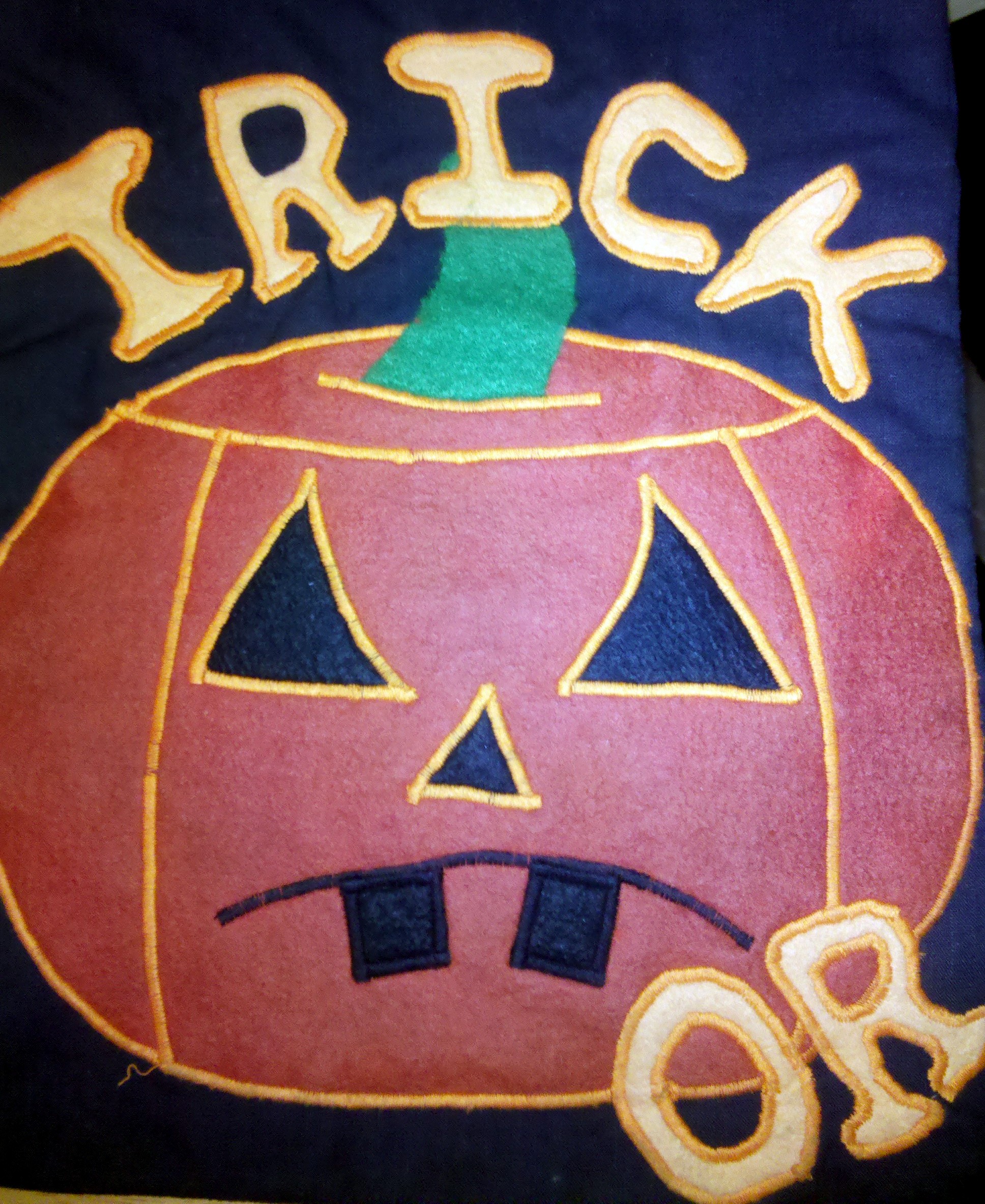
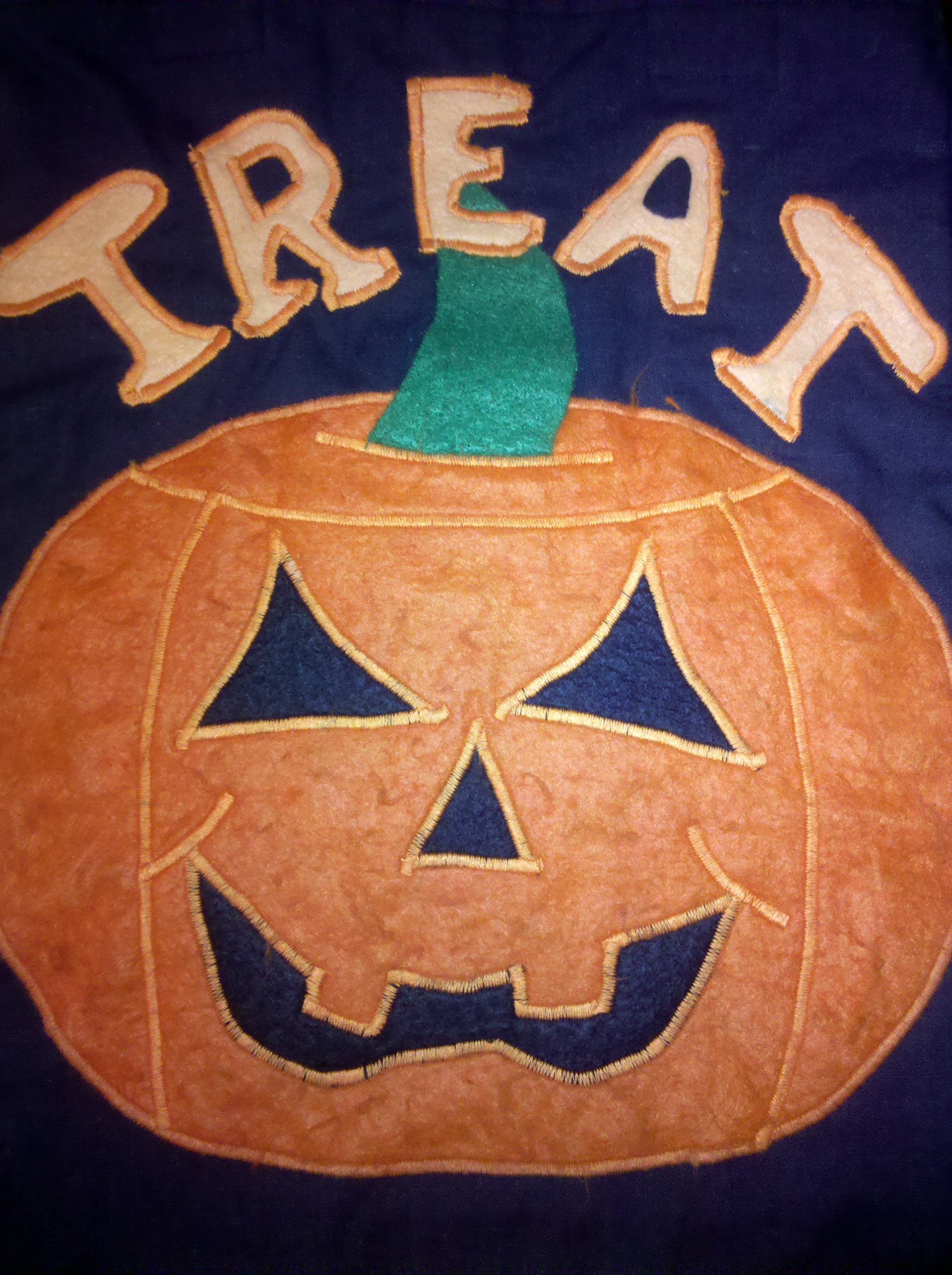
I know Halloween is really just around the corner but I thought I would share these applique designs with you.  Here are fun pumpkin faces that can be created and appliqued to the front and back of a sweatshirt or a tote bag used to collect all those goodies for that special spooky night!!   This would be great to showcase on two cute Halloween pillows  for your home decor too.

Felt works great for this applique  –  doesn’t fray and is easy to sew onto your project  –  or whatever scraps you may have in your fabric stash.  Refer to the pictures shown here to design your applique or “be creative” and make a different pumpkin face using circles or squares for the facial features.  I made bubble type letters but you could use square-shaped letters if you decide to applique words.

My design is approximately 10  1/2″ wide by 11  1/2″ in length and my letters are about 2  1/4″ square.  You can make your pumpkin face whatever size you need to fit your specific project.  If you don’t want the words “trick or treat”, you don’t have to use them or maybe you want your applique to say “Happy Halloween”.   Have fun with this design and make it your own!!

My applique design was created using orange felt for pumpkin, black felt for facial features, green felt for stem and gold felt for letters.  Sketched my pumpkin onto tracing paper so I could see how it would fit onto my project material, which was a black tote bag that I made.  Then I drew the facial features to fit the size of my pumpkin.   Using the tracing paper as my pattern, I cut out my shapes from the appropriate colored felt.   I appliqued the pumpkin onto a black twill fabric, first, using a small satin stitch.  Then I appliqued the facial features, did the stem and finally the letters.  Added satin stitches to give the pumpkin some dimension. Here’s a link to how I use wonder under to prepare my pieces. https://stitch4ever.com/2012/06/05/attaching-fusible-adhesive-to-your-applique/

I hope you enjoy all the possibilities with this design and can make it work for your own Halloween projects.

HAPPY CREATING!!

  • TIP – Print out coloring pages for pumpkin designs or use coloring books to help with your patternshapes.
  • Disclaimer:  This post contains affiliate links – “small commission earned”